
How Many Sets Should You Do? A Complete Guide to Training Volume
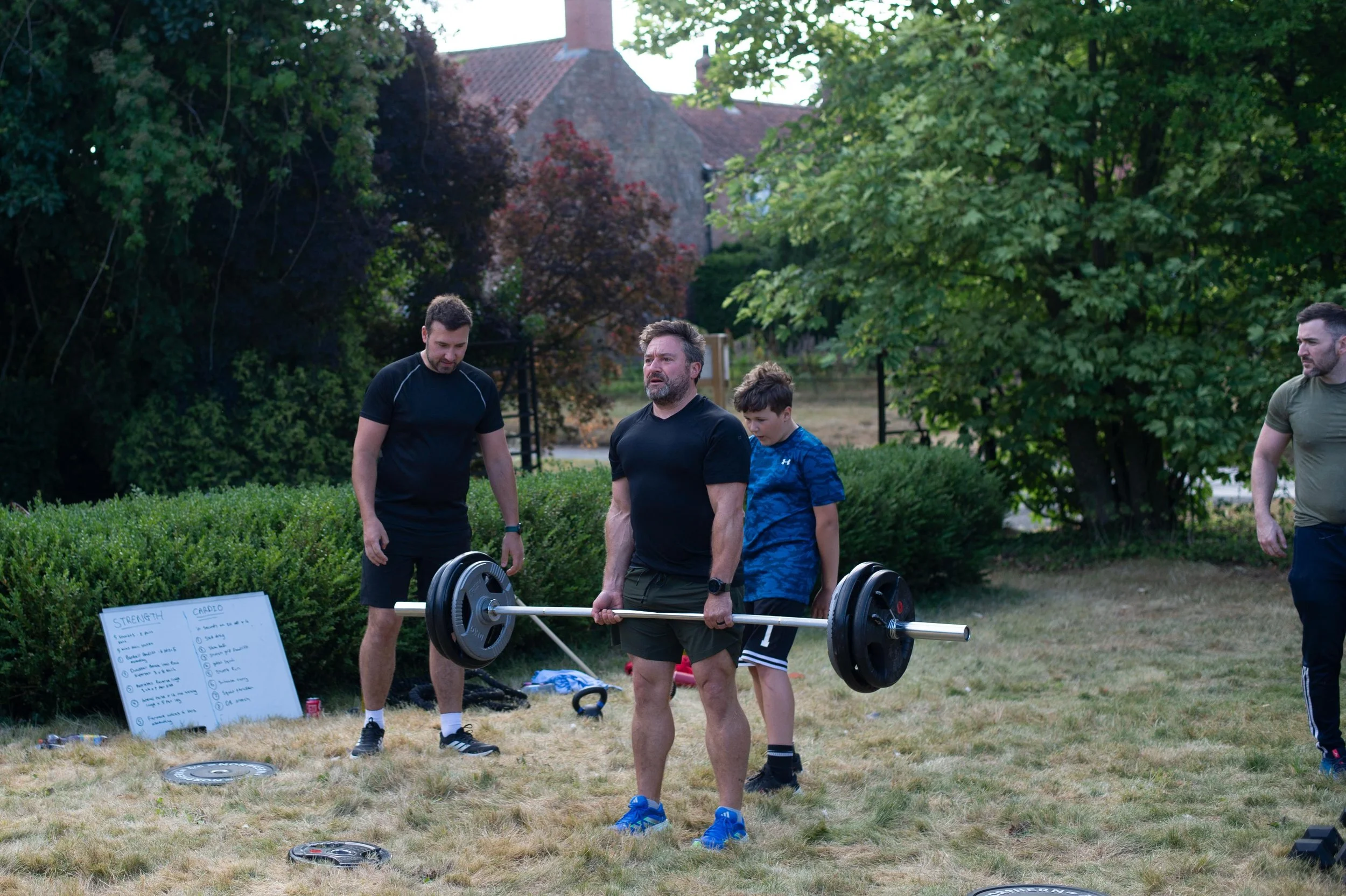
If you've ever wondered how many sets you should do to build muscle or strength, you're not alone. In this guide, I'll explain how training volume, recovery and progressive overload work together, and why mastering the four fundamental movement patterns forms the foundation of every strength program I write.
One of the most common questions I get asked as a personal trainer is:
"How many sets should I be doing?"
It's a simple question, but the answer isn't.
Many people assume that the strongest athletes and most experienced lifters spend hours in the gym performing endless sets and dozens of different exercises. In reality, training volume doesn't simply increase as you become stronger. In many cases, the opposite happens.
As you develop strength and experience, each hard set places a greater demand on your muscles, joints and nervous system. A set of squats performed by someone lifting 180 kg creates a very different recovery cost to the same number of repetitions performed by someone lifting 40 kg.
At the same time, beginners often benefit from more opportunities to practise the fundamental movement patterns that underpin strength training. Repeating high-quality movements helps develop coordination, confidence and technique, allowing them to progress more quickly over time.
This doesn't mean beginners should perform endless sets, nor does it mean advanced lifters should train with minimal volume. The goal is to perform enough quality work to drive progress while still recovering well enough to improve from session to session.
Throughout this article, I'll explain:
What training volume actually is.
Why beginners and advanced lifters often respond differently to it.
How fatigue changes as you become stronger.
Why I build the majority of my clients' programmes around four fundamental movement patterns - hinge, squat, push and pull.
How to decide how much volume is right for you.
Understanding training volume is one of the most valuable things you can learn if your goal is to build muscle, become stronger or simply train more effectively. Once you understand the principles, you'll stop chasing random workouts and start following a program that allows you to make consistent progress over months and years.
What Is Training Volume?
Training volume is one of the most important variables in any strength or muscle-building programme, yet it's also one of the most misunderstood.
Put simply, training volume refers to the amount of work you perform during a training session or over the course of a week. While coaches define volume in different ways depending on the context, most people use it to describe the total number of challenging working sets completed for a particular exercise or muscle group.
For example, if you perform:
3 sets of squats
3 sets of Romanian deadlifts
3 sets of walking lunges
you've completed 9 working sets for your lower body during that session.
Although this seems straightforward, training volume isn't simply a case of "more is better".
The number of sets you can recover from depends on several factors, including:
Your training experience.
How close each set is to failure.
The amount of weight you're lifting.
Exercise selection.
Sleep, nutrition and recovery.
Your overall stress levels.
Two people could both complete four sets of squats, yet the training effect could be completely different.
Imagine one person has just started strength training and squats 40 kg for 8 repetitions, while another has trained consistently for years and squats 180 kg for the same number of repetitions.
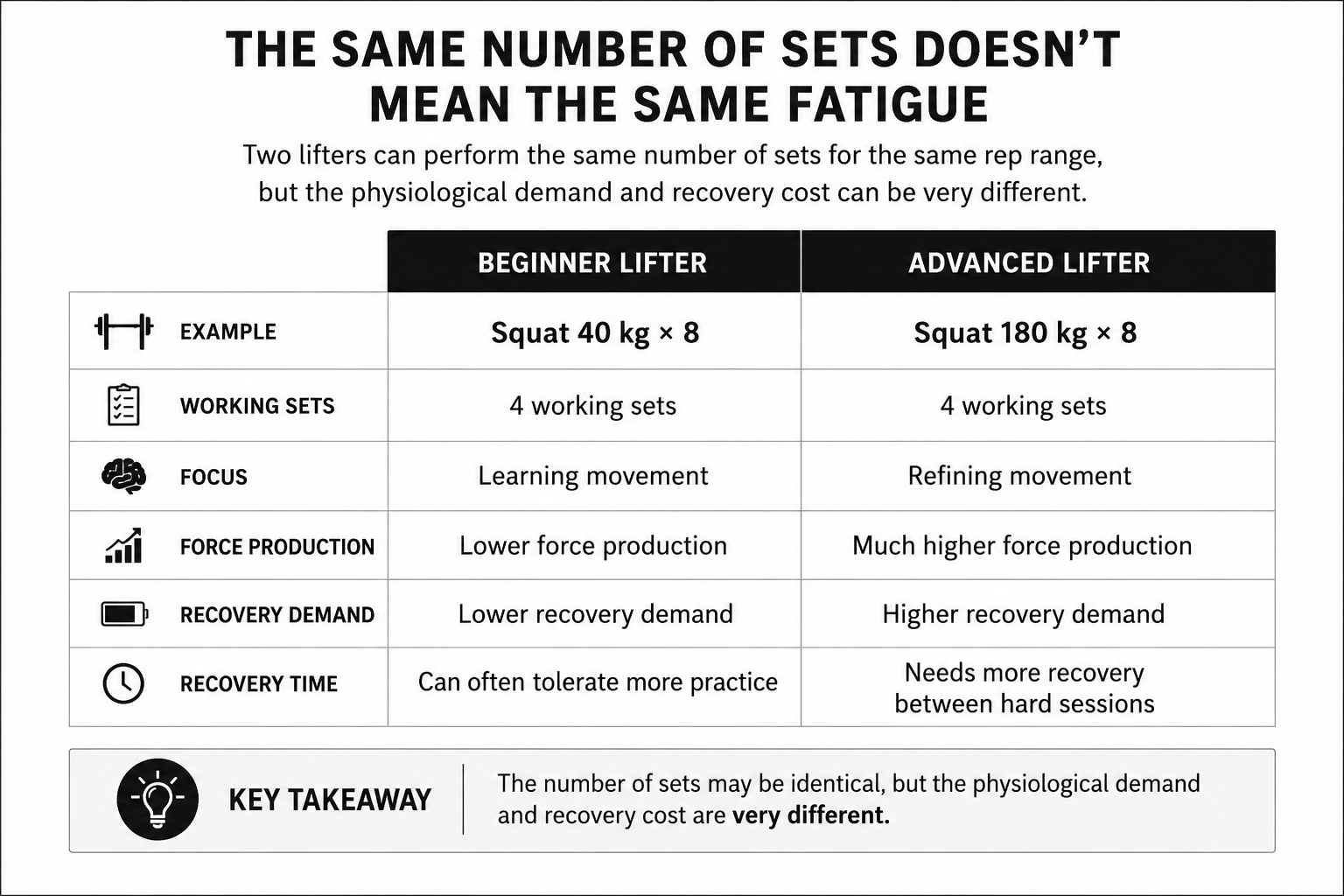
On paper, they've both completed four sets.
In reality, the stronger lifter has generated significantly more force, recruited more muscle tissue and placed a much greater demand on their body. Those sets are likely to require considerably more recovery before they're ready to perform at the same level again.
This is one of the biggest mistakes people make when comparing training programmes online.
They assume that because an elite powerlifter or bodybuilder performs fewer exercises or fewer hard sets than they expected, the programme must be incomplete.
In reality, advanced lifters often make every set count. The quality, intensity and recovery cost of each working set become far more important than simply adding more volume.
Understanding this principle is essential because it explains why beginners and experienced lifters shouldn't necessarily train in exactly the same way.
The goal isn't to perform as many sets as possible. The goal is to perform enough high-quality work to stimulate progress while still recovering well enough to improve in your next session.
If you're unsure how many sets you should actually perform as a beginner, keep reading. The next section explains why beginners often benefit from a different approach to experienced lifters.
Why Beginners Often Benefit From More Volume Than Advanced Lifters
One of the biggest misconceptions in strength training is that the strongest athletes must perform the highest number of sets.
It sounds logical at first. If someone can squat 200 kg or deadlift 250 kg, surely they must need far more training than someone who's just joined a gym.
In practice, that's often not how it works.
Many beginners can tolerate more training volume than people expect, while advanced lifters often need fewer hard working sets because each one places a much greater demand on their body.
The important distinction is that volume and recovery are closely linked. The goal isn't to complete as many sets as possible. The goal is to complete enough high-quality work to stimulate progress while still recovering before your next session.
Beginners Need Practice
When somebody starts strength training, the limiting factor usually isn't muscle size.
It's movement quality.
Most beginners are still learning how to squat, hinge, press and pull efficiently. Their nervous system is developing the coordination needed to recruit muscles effectively, maintain balance and produce force in the right sequence. It’s why they’re often shaky and un-coordinated.
Every good repetition is another opportunity to improve that skill.
This is one of the reasons beginners often make rapid progress during their first few months of training. They're not only building muscle, they're becoming better at performing the movement itself.
Because of this, beginners can often benefit from practising the same movement patterns regularly. More quality repetitions help reinforce good technique, build confidence and improve consistency.
Stronger Doesn't Always Mean More Sets
As your strength increases, something else changes.
Every hard set becomes more demanding.
A lifter squatting 180 kg isn't simply lifting a heavier bar than someone squatting 40 kg. They're producing considerably greater force, placing more stress on their muscles and connective tissues, and creating a larger overall recovery demand.
While they may perform the same number of repetitions, the physiological cost of those repetitions is much higher.
This is one of the reasons experienced lifters often become more selective with their training volume and exercise selection. Rather than adding more and more sets, they focus on ensuring every working set has a clear purpose.
Recovery Drives Progress
One of the biggest mistakes I see is people assuming progress happens during the workout.
It doesn't.
Training provides the stimulus.
Recovery is where adaptation takes place.
If you're constantly performing more volume than you can recover from, your performance gradually declines. You might feel permanently sore, struggle to increase the weight on the bar or simply stop making progress altogether. Sometimes it’ll present as niggling joints.
On the other hand, performing too little volume may not provide enough stimulus to improve.
Finding the balance between these two extremes is where good programming matters.
What This Means For Most People
Whether your goal is building muscle, becoming stronger or improving your general fitness, more isn't automatically better.
I'd much rather see someone perform:
3 excellent sets with good technique
Recover well
Add a little more weight or an extra repetition next week
than perform 10 mediocre sets simply because they think more volume must produce better results.
Long-term progress comes from consistency, individual programming and gradual progression - not from seeing how much work you can survive.
Why I Build Almost Every Program Around Four Fundamental Movement Patterns
Walk into most commercial gyms and you'll see people performing an endless variety of exercises.
One person is using three different chest machines before moving onto cable flyes. Someone else is performing five different bicep exercises. Another person has copied an advanced bodybuilder's programme from social media without really understanding why those exercises were chosen.
There's nothing inherently wrong with variety.
However, for the vast majority of people, it isn't the thing holding them back.
Most people would achieve far better results by becoming exceptionally good at a small number of fundamental movement patterns than by constantly chasing new exercises.
This is one of the core principles behind almost every programme I write.
Rather than asking:
"Which exercises should we add?"
I ask:
"How can we become stronger and more efficient at the movements that matter most?"
Movement Patterns, Not Individual Exercises
When people first start training, it's easy to become obsessed with individual exercises.
Should I back squat or front squat?
Should I deadlift conventionally or use a trap bar?
Should I bench press with dumbbells or a barbell?
These questions matter eventually, but they're often missing the bigger picture.
Strength training isn't really about individual exercises.
It's about movement.
Every exercise is simply a variation of one or more fundamental movement patterns.
If you improve those movement patterns over time, you'll usually improve regardless of which specific exercise variation you're using.
That's why I build the majority of programmes around four simple categories:
Hinge
Squat
Push
Pull
Together, these movements develop most of the major muscle groups while also teaching the body how to produce force efficiently. The nice thing about variation is we can regress and progress depending on where a client is at or if it needs to be adjusted so that they can move pain free.
Research consistently shows that compound, multi-joint exercises recruit large amounts of muscle mass and provide an efficient stimulus for increasing strength and muscle size when programmed appropriately. They also allow progressive overload to be measured more easily than constantly rotating between isolation exercises.
The Hinge
The hinge is one of the most important movement patterns you'll ever learn.
Examples include:
Romanian deadlift
Trap bar deadlift
Kettlebell swing
Good morning
A good hinge develops the posterior chain - particularly the glutes, hamstrings and spinal erectors - while teaching you how to lift safely from the floor.
Whether you're picking up shopping bags, moving furniture or lifting your children, you're using a hinge pattern.
Many beginners initially struggle with this movement because they're unfamiliar with separating hip movement from spinal movement. They are taught to squat to pick things up and as a result are usually un-coordinated with their hips.
Once this clicks, strength usually increases rapidly.
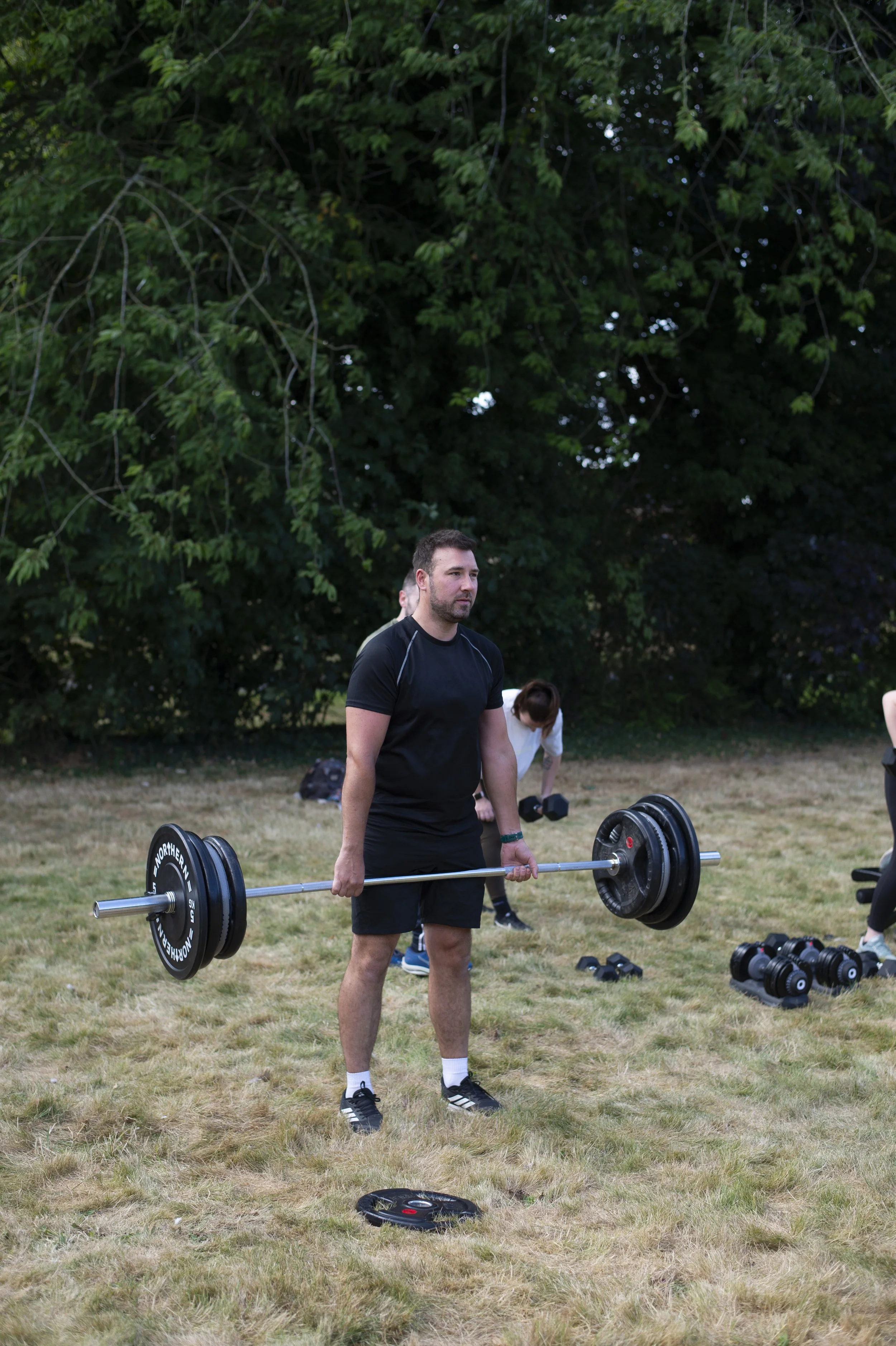
My client Andy performing the Barbell Deadlift. Developing a strong hinge pattern is one of the foundations of every strength training program I write.
Watch the Hinge Movement
This video shows a conventional deadlift - one of the best examples of the hinge movement pattern. Although this is a heavy lift, (210kg) the same principles apply whether you're learning with a kettlebell or progressing towards heavier weights.
The Squat
The squat is another movement that transfers into everyday life more than people often realise.
Standing up from a chair, getting off the floor and climbing stairs all involve variations of a squat pattern.
Examples include:
Goblet squat
Front squat
Back squat
Belt squat
Split squat
Bulgarian split squat
Different variations have different advantages, but they all teach the body how to produce force through the lower body while maintaining control and stability.
For many beginners, a goblet squat provides a fantastic starting point because it naturally encourages good positioning while allowing confidence to develop before progressing onto more demanding variations.
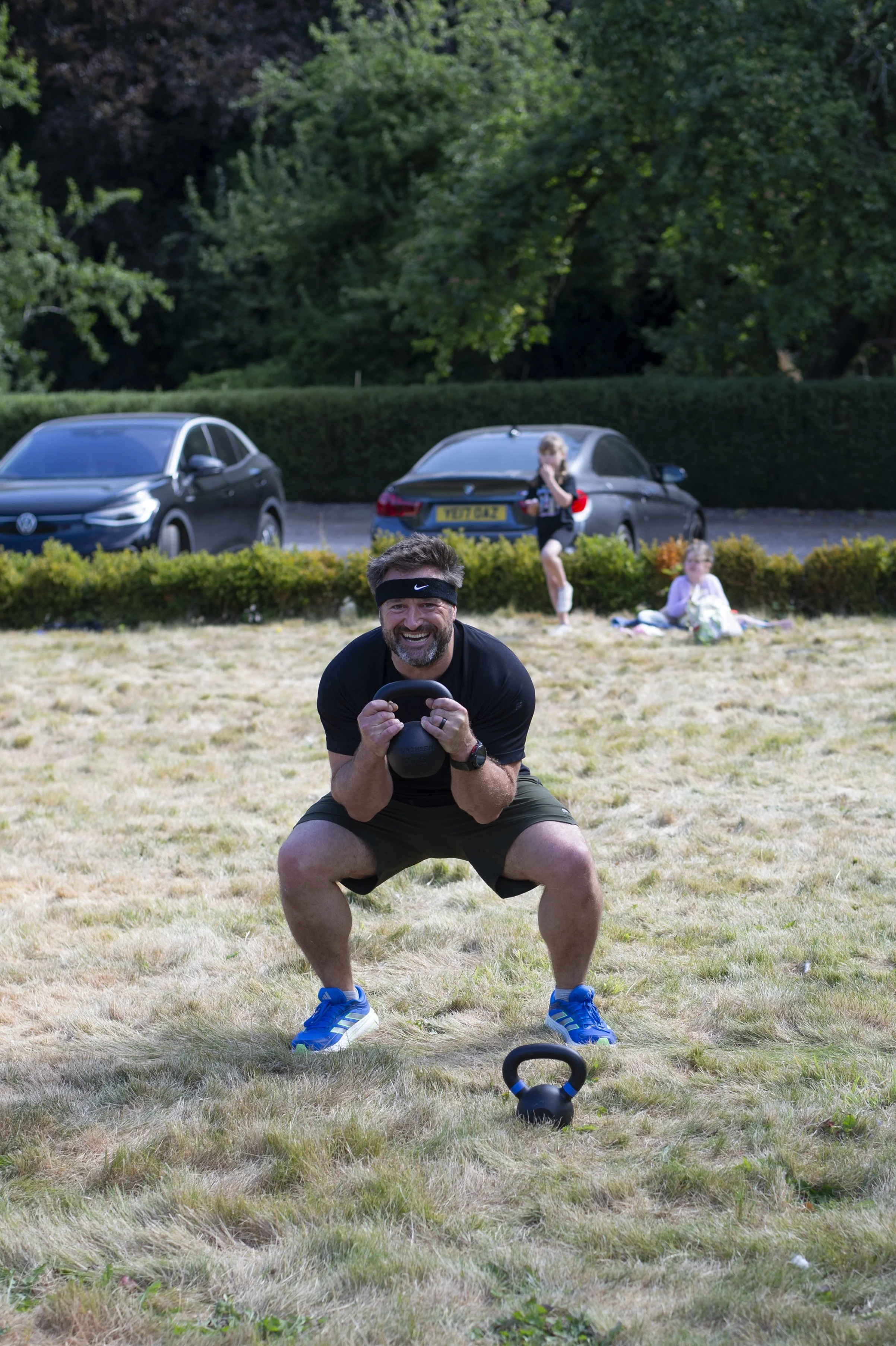
The goblet squat is one of my favourite squat variations for beginners. Holding the weight in front naturally encourages a more upright torso while helping develop confidence, balance and movement quality.
Watch The Squat Movement
Here's an example of the belt squat - a fantastic variation that allows you to load the legs heavily while reducing the amount of stress placed on the spine. Although the exercise looks different from a goblet squat, the movement pattern remains the same.
Common Mistakes
Letting the knees collapse inwards.
Losing balance through the feet.
Cutting the range of motion short.
Choosing a variation that's too advanced before mastering the basics.
Key Takeaway
Don't worry about finding the "perfect" squat exercise. Focus on becoming stronger and more confident in the squat movement pattern, then choose the variation that best suits your goals and experience.
The Push
Pushing movements develop the muscles responsible for pressing objects away from the body.
Examples include:
Press-ups
Dumbbell bench press
Barbell bench press
Incline press
Overhead press
Machine press
I generally choose the variation that allows someone to train hard with good technique rather than assuming one exercise is universally superior.
Someone with shoulder discomfort may tolerate a machine press far better than a traditional barbell bench press.
The movement pattern remains the priority.
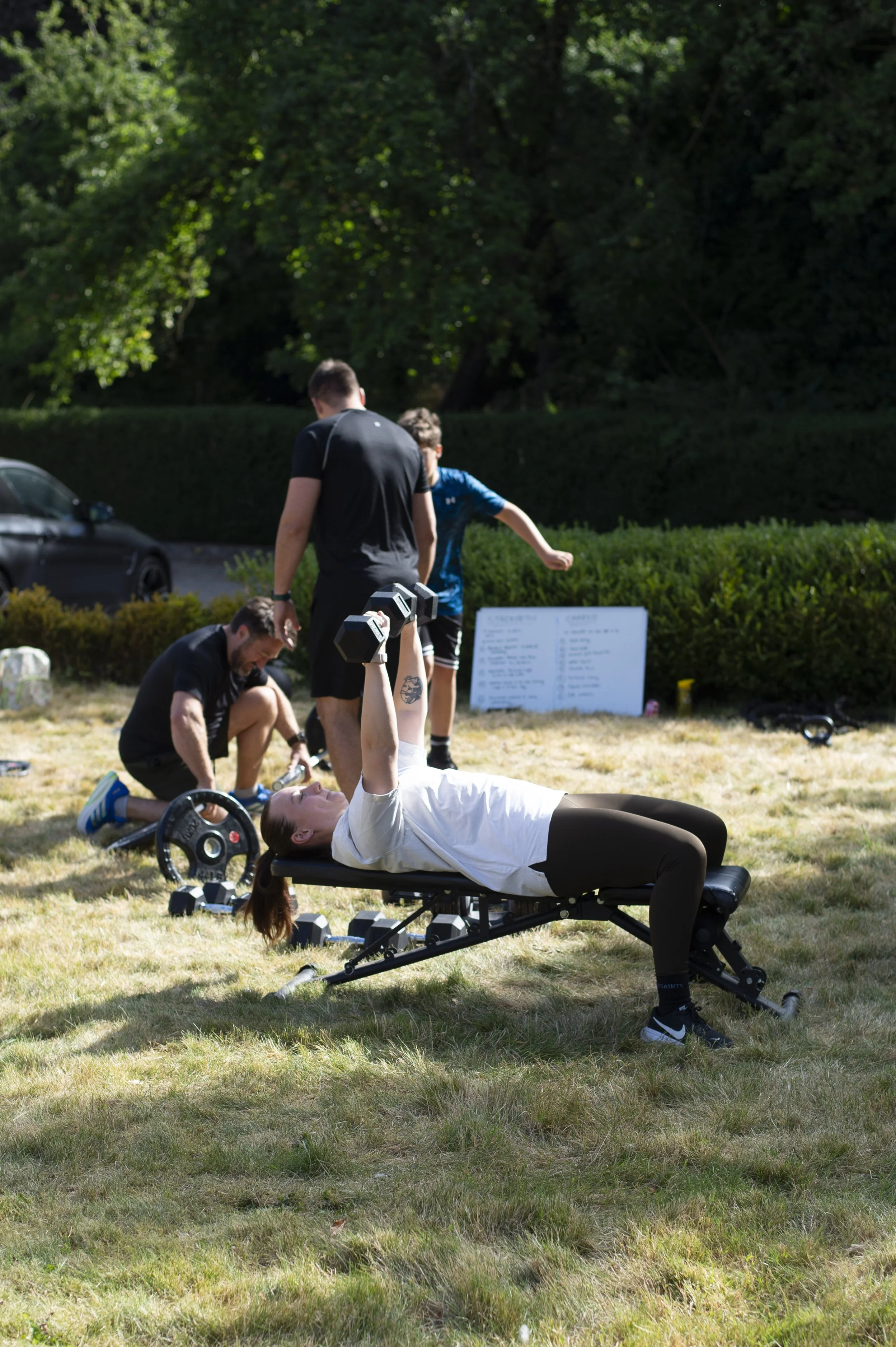
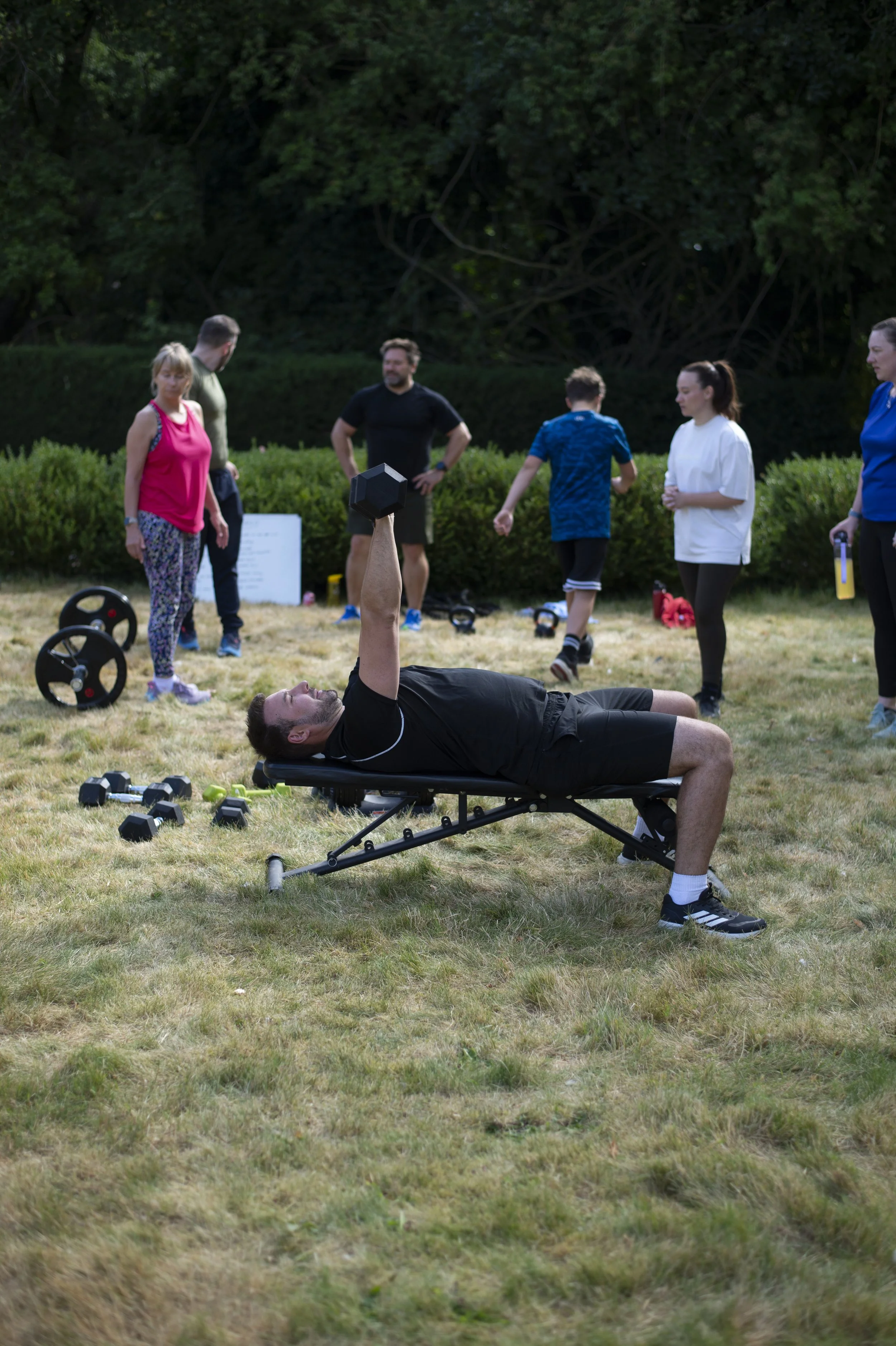
The dumbbell bench press is one of my favourite pushing exercises. It develops the chest, shoulders and triceps while allowing each side to work independently, making it a great option for beginners and experienced lifters alike.
Watch a pressing movement
This video shows a paused barbell bench press, one of the most effective examples of the push movement pattern. Pausing the bar on the chest removes momentum and reinforces control, stability and good technique throughout the lift. The same principles apply whether you're performing press-ups, dumbbell bench presses or machine presses.
Whether you're performing press-ups, the dumbbell bench press, the barbell bench press or a chest press machine, the underlying movement pattern remains the same.
The Pull
If there's one movement pattern I think is undertrained by many people, it's pulling.
Rows, pull-ups and pulldowns strengthen the muscles of the upper back, lats and arms while helping develop posture, grip strength and shoulder stability.
Examples include:
Pulling strength also tends to improve performance in many sports and everyday activities because it develops the muscles responsible for controlling the shoulder and upper back.
As someone who has spent years helping clients achieve their first pull-up, I'm probably a little biased - but I genuinely believe building a strong pull is one of the most rewarding goals in strength training.
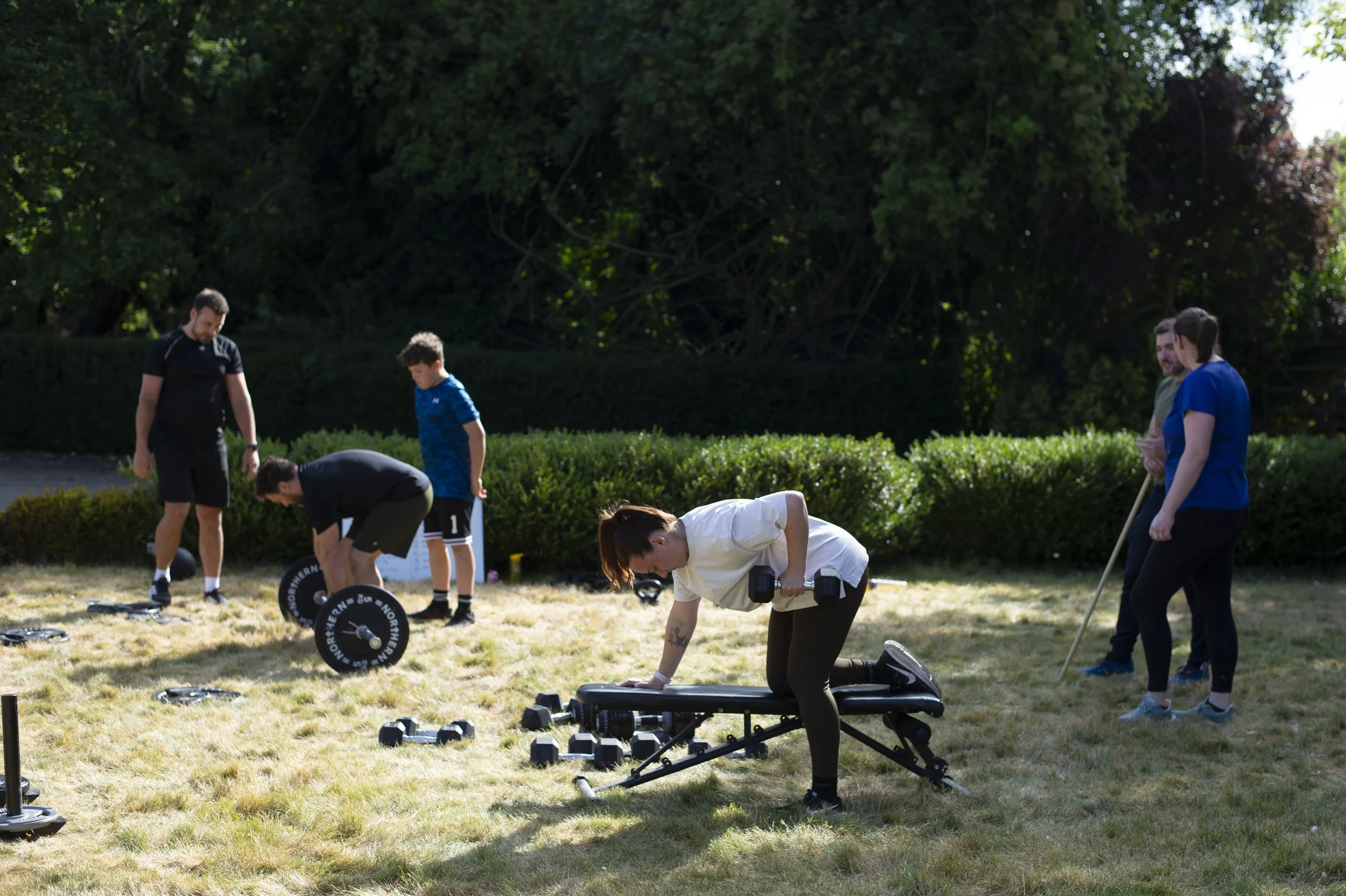
The dumbbell row is an excellent pulling exercise for developing the lats, upper back and grip strength. It's a simple movement that can be progressed for years while reinforcing good technique and control.
Watch a pulling movement
This video shows a weighted pull-up - one of the most challenging examples of the pull movement pattern. Although additional weight increases the difficulty, the same principles apply whether you're performing assisted pull-ups, ring rows, lat pulldowns or bodyweight pull-ups. Focus on controlled movement, a full range of motion and gradual progression over time.
Common Mistakes
Using excessive momentum.
Shrugging the shoulders.
Pulling with the arms instead of driving the elbows.
Cutting the range of motion short.
Progressing to weighted pull-ups before mastering bodyweight repetitions.
Why I Don't Chase Variety
One of the biggest mistakes I see is people changing exercises every week because they're worried they'll "stop shocking the muscles".
In reality, constantly changing exercises often makes progression harder.
If you're performing a different squat variation every session, how do you know whether you're actually becoming stronger?
Consistency makes progress measurable.
That's why many of my clients will spend several weeks progressing the same core lifts before we make any significant changes.
The exercises may evolve over time, but the movement patterns rarely do.
A hinge is still a hinge.
A squat is still a squat.
A push is still a push.
A pull is still a pull.
Master those four movement patterns and you've already built an excellent foundation for becoming stronger, building muscle and improving your overall fitness.
Key Takeaway
Strong pulling movements build more than just your back. They improve grip strength, shoulder stability and overall upper-body strength, making them an essential part of any balanced strength training program.
How Much Training Volume Should You Actually Do?
Now that we've covered what training volume is and why beginners and advanced lifters often respond to it differently, the obvious question is:
How much training volume should you actually do?
Unfortunately, there isn't a magic number.
One of the biggest mistakes people make is searching for the perfect number of sets per muscle group or the perfect number of exercises per workout.
The reality is that the right amount of training volume depends on several factors, including:
Your training experience.
Your recovery capacity.
The intensity of your workouts.
Your goals.
Your nutrition and sleep.
The amount of stress outside the gym.
A well-designed program isn't the one with the highest training volume.
It's the one that allows you to recover, improve your performance and continue progressing week after week.
Understanding MEV and MRV
Strength coaches often use two useful concepts when discussing training volume:
Minimum Effective Volume (MEV) refers to the smallest amount of training needed to stimulate progress.
Maximum Recoverable Volume (MRV) refers to the greatest amount of training you can recover from while still continuing to improve.
Think of it as a spectrum.
Train below your MEV and you may maintain your current level of strength but struggle to make meaningful progress.
Train consistently above your MRV and recovery eventually becomes the limiting factor. Performance declines, motivation often drops and progress usually slows or stops altogether.
The sweet spot lies somewhere between these two.
For most people, you don't need to constantly push towards your maximum recoverable volume.
In fact, you'll often make better long-term progress by performing enough quality work to improve while still feeling fresh enough to train well again in your next session.
Beginners
If you're new to strength training, it's easy to assume that more work automatically means better results.
It rarely works that way.
Most beginners make excellent progress by focusing on:
Learning the fundamental movement patterns.
Improving technique.
Building consistency.
Recovering well between sessions.
During the early stages of training, strength often improves rapidly because you're developing better coordination as well as building muscle.
Rather than adding endless exercises, I prefer to keep programs simple and allow people to improve at the basics.
A beginner who consistently progresses their hinge, squat, push and pull movements over several months will almost always outperform someone who changes exercises every week.
Intermediate Lifters
As you gain experience, progress naturally begins to slow.
At this stage, training volume often needs to increase slightly to continue providing enough stimulus.
That doesn't necessarily mean doubling the number of exercises.
It usually means becoming more deliberate with your training.
Examples include:
Adding an additional working set.
Performing another quality repetition.
Increasing the training load.
Improving movement quality.
Increasing training frequency when recovery allows.
Small improvements accumulated over months are what produce long-term results.
Advanced Lifters
Advanced lifters present a different challenge.
Because they're capable of producing much greater levels of force, every genuinely hard set carries a larger recovery cost.
This is one reason elite strength athletes often surprise people.
Their training isn't always longer than everyone else's.
It's simply more demanding.
Every heavy squat, deadlift or bench press requires significant physical and mental effort.
Instead of endlessly increasing volume, experienced lifters often become more selective.
Every exercise has a purpose.
Every working set contributes towards a specific goal.
Quality almost always becomes more important than quantity.
Recovery Should Guide Your Volume
One of the best indicators that your training volume is appropriate isn't how tired you feel after today's workout.
It's how well you perform next week.
Ask yourself:
Are you gradually getting stronger?
Is your technique improving?
Are you recovering between sessions?
Are you looking forward to training?
Are your aches and soreness settling before your next workout?
If the answer is yes, your current training volume is probably in a good place.
If performance is falling, motivation is disappearing and you're constantly exhausted, your recovery may not be keeping up with your workload.
Sometimes the smartest thing you can do isn't adding another exercise.
It's removing one.
My Approach
When I write a strength training program, I don't start by asking:
"How many sets should this person do?"
Instead, I ask:
What's their training experience?
What are they trying to achieve?
How often can they realistically train?
How well are they recovering?
Can they perform the four fundamental movement patterns safely and consistently?
The answers to those questions determine the program far more than any arbitrary target for weekly sets.
For most people, consistent progress comes from repeatedly doing the basics well, recovering properly and making small improvements over time.
Not from trying to complete as much work as possible.
📌 Key Point
The best training volume isn't the maximum you can survive - it's the minimum that allows you to make consistent progress while recovering well enough to improve again next week.
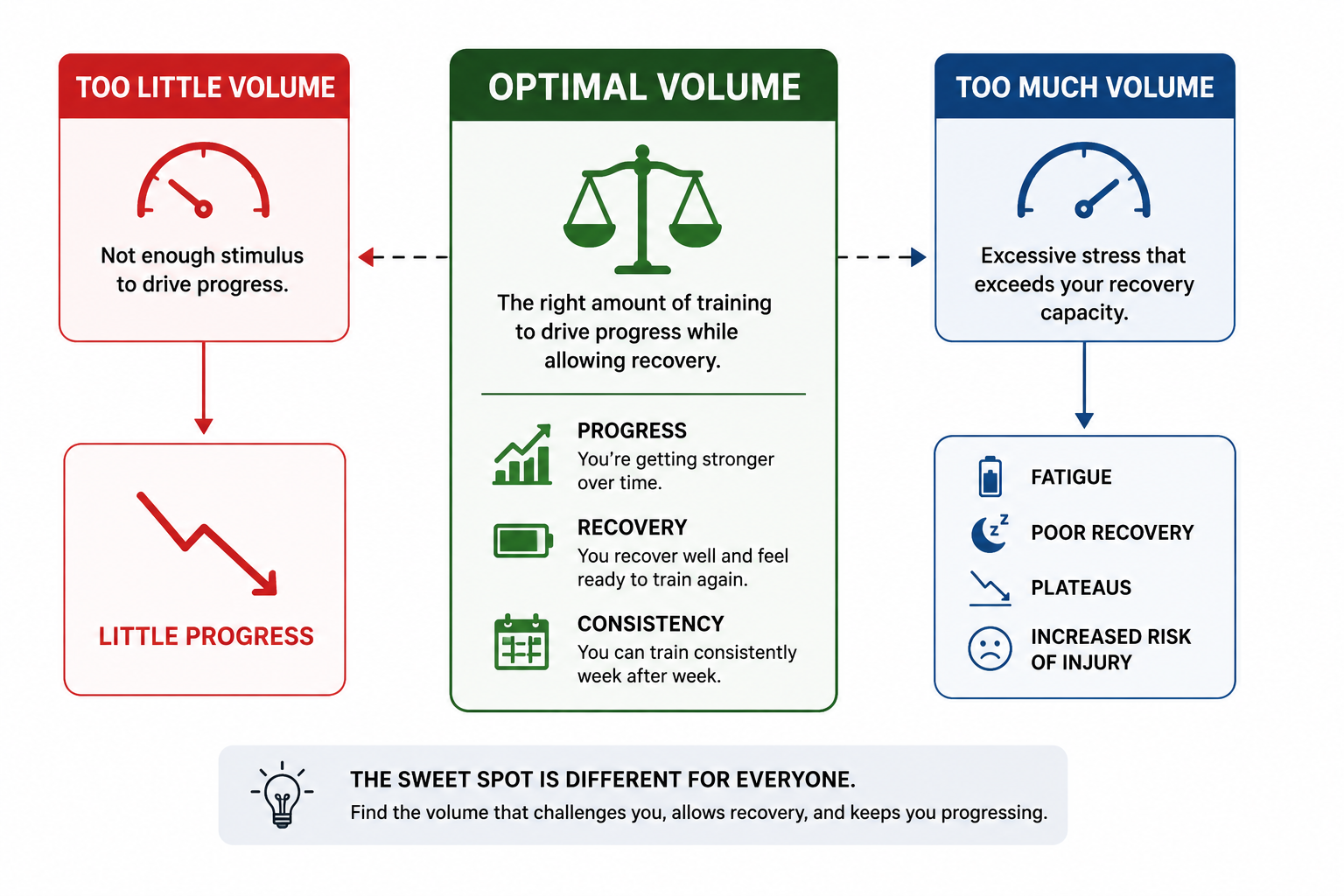
Finding the right training volume is about balancing enough work to stimulate progress with enough recovery to continue improving. The goal isn't to do as much as possible - it's to do enough to get stronger, build muscle and stay consistent.
Progressive Overload - The Missing Piece
One of the biggest misconceptions in strength training is that doing more work automatically leads to better results.
It doesn't.
You can perform exactly the same workout every Monday for the next five years and eventually your body will stop adapting.
Your body adapts because it's given a reason to adapt.
This is known as progressive overload.
Progressive overload simply means gradually increasing the demands placed on your muscles over time so that your body continues adapting.
It doesn't mean adding weight to the bar every session.
It means doing slightly more than you were capable of before.
That might be:
Adding 2.5 kg to the bar.
Performing one extra repetition.
Completing an additional working set.
Improving your technique.
Increasing your range of motion.
Moving the same weight with greater control.
Every one of these is a form of progression.
Progress Doesn't Have To Be Dramatic
Many people assume that if they aren't setting a personal best every week, they're not improving.
In reality, strength development is rarely linear.
Some weeks you'll add weight.
Other weeks you'll perform an extra repetition.
Sometimes you'll simply perform the same workout with better technique and more confidence.
These are all signs of progress.
The goal isn't to force progress every session.
It's to create a trend of improvement over months and years.
Why Beginners Progress So Quickly
One of the reasons beginners improve rapidly isn't because they have discovered a secret program.
It's because almost everything is new.
Their technique improves.
Their confidence improves.
Their coordination improves.
Their muscles become stronger.
Almost every session provides a stimulus their body hasn't experienced before.
As experience increases, those rapid improvements naturally begin to slow.
That's completely normal.
Why Advanced Lifters Progress More Slowly
An advanced lifter may spend months adding just 2.5 kg to their squat.
That doesn't mean the program has stopped working.
It means they're much closer to their current physical potential.
When you're already lifting heavy weights, every small improvement represents a significant increase in performance.
That's why advanced programs often focus on refining technique, managing fatigue and recovering well rather than constantly increasing volume.
My Philosophy
This is one of the biggest reasons I keep my clients on the same core exercises for several weeks at a time.
If you're changing exercises every session, it becomes much harder to answer an important question.
Are you actually getting stronger?
Consistency allows us to measure progress.
We can see:
More weight.
More repetitions.
Better technique.
Greater control.
Improved confidence.
That's meaningful progression.
Constantly changing exercises might make training feel more exciting, but it often makes progress much harder to measure.
For most people, I'd rather see six months of gradual improvement on the same movement patterns than six weeks of random workouts with no clear direction.
📌 Key Point
Training volume tells you how much work to do. Progressive overload tells your body why it needs to become stronger. You need both if you want to make long-term progress.
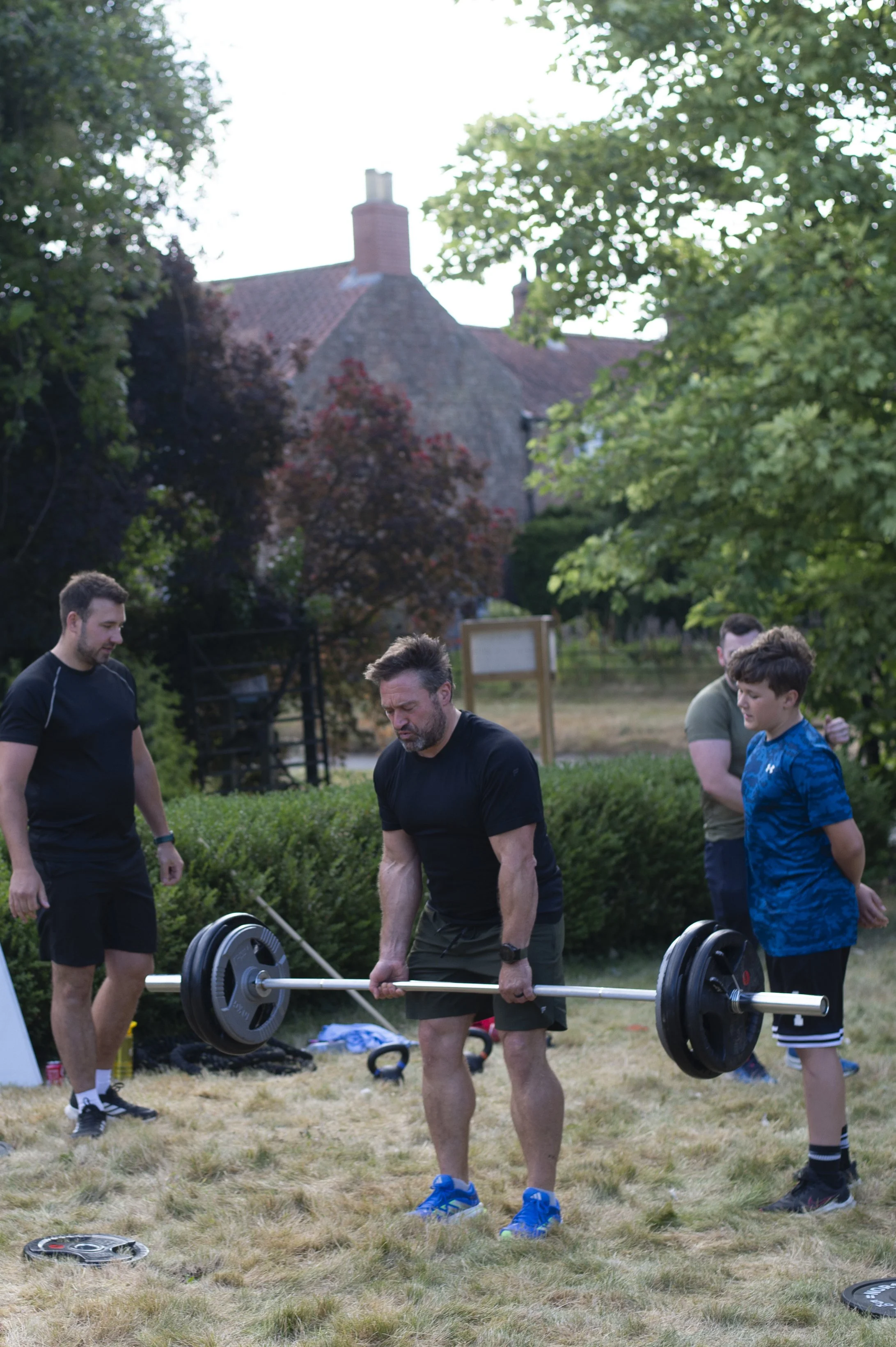
Progressive overload isn't about constantly changing exercises. It's about becoming stronger, more confident and more technically proficient in the movements that matter most.
Common Strength Training Mistakes
After years of coaching clients of all ages and abilities, I've realised that most people don't fail because they lack motivation.
They fail because they spend too much time focusing on the wrong things.
The good news is that most training mistakes are surprisingly easy to fix.
Here are some of the most common mistakes I see, along with the changes that usually lead to better long-term results.
1. Doing More Volume Than You Can Recover From
Many people believe that more sets automatically lead to more muscle and strength.
In reality, there comes a point where additional volume stops helping and simply becomes extra fatigue.
If you're constantly sore, struggling to complete workouts, seeing your performance decline or feeling exhausted before every session, your recovery may not be keeping pace with your training.
Remember that muscles don't grow while you're training.
They grow while you're recovering.
Finding the right balance between stimulus and recovery is one of the most important parts of any successful strength training program.
2. Changing Exercises Every Week
Social media has convinced many people that every workout needs to be completely different.
It doesn't.
Changing exercises too frequently makes it difficult to measure progress.
If last week you performed goblet squats, this week front squats and next week Bulgarian split squats, how do you know whether you've actually become stronger?
Consistency allows progression to be measured.
That's why many of my clients spend several weeks progressing the same core lifts before we introduce meaningful changes.
The movement patterns remain the same, even if the exercises eventually evolve.
3. Going to Failure on Every Set
Training to failure has its place.
However, trying to take every single working set to absolute failure often creates unnecessary fatigue.
Technique usually begins to deteriorate.
Recovery takes longer.
The quality of later sets often suffers.
For most people, leaving one or two repetitions in reserve on the majority of working sets allows them to train harder across the entire week while still making excellent progress.
4. Ignoring Progressive Overload
Turning up consistently is important.
Progressing consistently is even more important.
If you're lifting the same weight for the same repetitions month after month, your body has little reason to continue adapting.
Progressive overload doesn't always mean adding more weight.
Sometimes it means:
Performing an extra repetition.
Improving technique.
Increasing your range of motion.
Controlling the weight more effectively.
Reducing rest periods while maintaining performance.
Small improvements repeated consistently produce impressive long-term results.
5. Copying Elite Athletes
One of the fastest ways to become frustrated is copying the training of someone who's spent twenty years building strength.
Elite lifters often train with volumes, intensities and exercise selections that simply aren't appropriate for beginners.
Rather than asking:
"What does the strongest person in the gym do?"
Ask:
"What does someone at my current level need to improve?"
The answer is almost always mastering the basics.
6. Focusing on Individual Exercises Instead of Movement Patterns
Many people spend hours debating whether one exercise is slightly better than another.
Should you back squat or front squat?
Barbell bench press or dumbbell bench press?
Lat pulldown or pull-ups?
These questions matter far less than most people think.
What matters most is becoming stronger within the fundamental movement patterns:
Hinge
Squat
Push
Pull
Master those consistently and you'll build strength that transfers across countless different exercises.
7. Not Tracking Your Training
Imagine trying to manage your finances without ever checking your bank balance.
Training works in much the same way.
If you aren't recording your workouts, how do you know whether you're progressing?
Keeping a simple training log allows you to see:
More weight lifted.
More repetitions completed.
Better movement quality.
Improved consistency.
Without tracking your training, it's very easy to mistake random workouts for genuine progress.
Key Point
The best strength training programs aren't built around constantly changing exercises. They're built around consistently improving the fundamentals over time.
Frequently Asked Questions
How many sets should beginners do?
There isn't one perfect number of sets that suits everyone. Most beginners make excellent progress by focusing on a small number of compound exercises, performed consistently with good technique. Rather than chasing more volume, prioritise learning the fundamental movement patterns, recovering well and gradually progressing over time.
Is more training volume always better?
No. Training volume is only beneficial if you can recover from it. Performing more work than your body can adapt to often leads to unnecessary fatigue, reduced performance and slower progress. The goal is to find the smallest amount of training that reliably produces results while allowing you to recover between sessions.
Should beginners train to failure?
Not on every set. Beginners usually benefit more from practising good technique than from pushing every exercise to complete failure. Finishing most sets with one or two repetitions left in reserve often allows better movement quality and more consistent progress.
How often should I strength train?
For most people, 2-4 strength sessions per week provides enough opportunity to build strength and muscle while allowing adequate recovery. The ideal frequency depends on your experience, goals and how much time you have available.
What are the four fundamental movement patterns?
The four movement patterns I build most of my programs around are:
Hinge
Squat
Push
Pull
Mastering these movements develops full-body strength and provides a solid foundation for long-term progress.
Should I change my exercises every week?
Usually not. Consistency makes progress measurable. Rather than constantly changing exercises, focus on gradually improving your performance through progressive overload. Once progress slows or your goals change, your program can evolve accordingly.
Final Thoughts
Building strength isn't about finding the perfect exercise or completing the highest number of sets.
It's about consistently applying the right amount of training, recovering well and improving over time.
For most people, that means mastering the fundamentals before chasing complexity.
Focus on the movement patterns that matter.
Apply progressive overload.
Recover properly.
Remain consistent.
Do those things for months and years rather than weeks, and you'll build strength that lasts.
About Jack Bradley Fitness
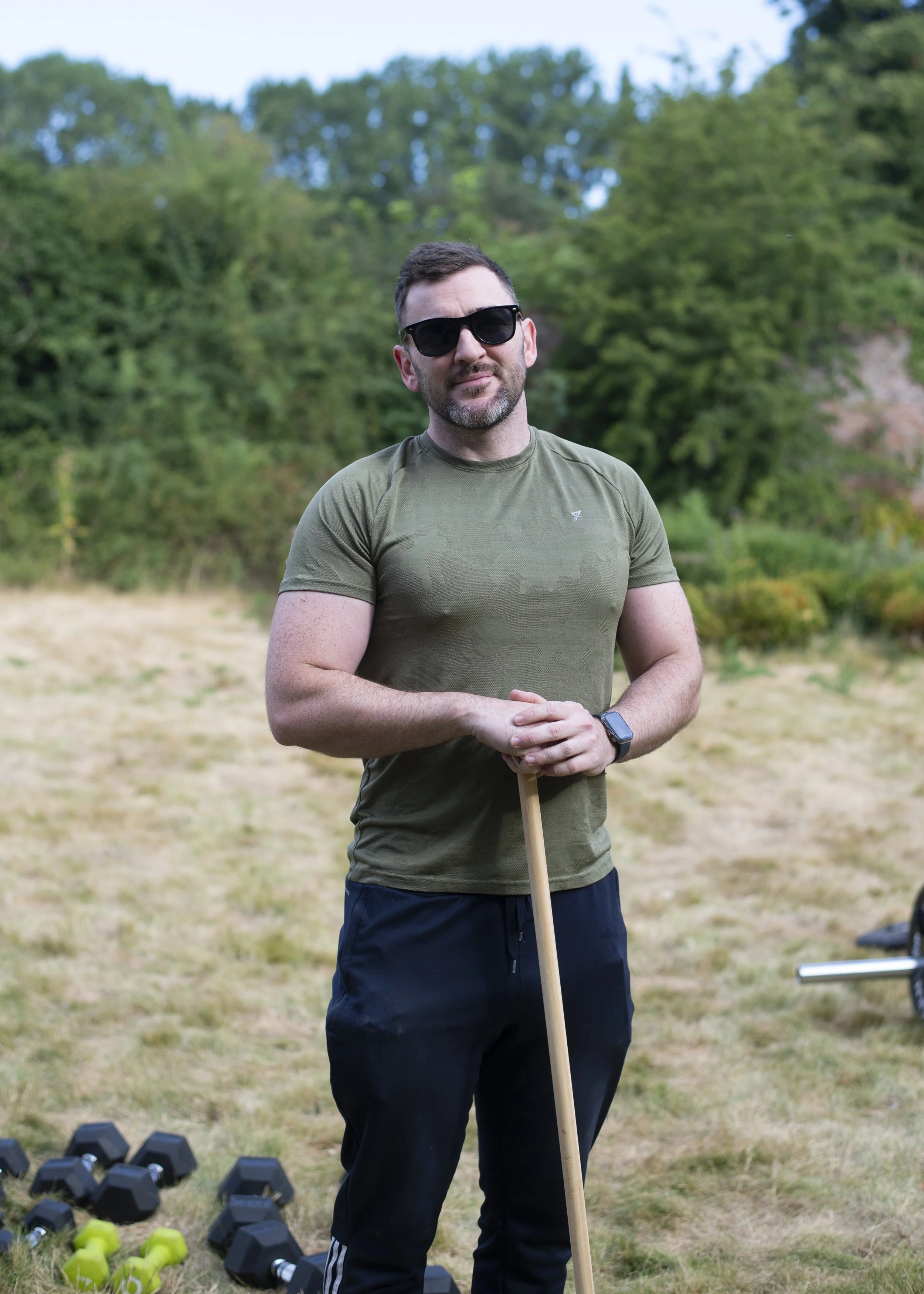
I'm Jack Bradley, a personal trainer and strength coach based near York, helping people of all ages and experience levels become stronger through simple, evidence-informed strength training.
Rather than chasing complicated workouts or constantly changing exercises, I build programs around progressive overload and the four fundamental movement patterns - hinge, squat, push and pull.
Whether your goal is building muscle, getting stronger, improving your fitness or achieving your first pull-up, my coaching focuses on long-term progress that fits around real life.
If you'd like help building a strength training program that's tailored to your goals, I'd love to hear from you.
Get in touch to find out more about personal training and small group strength coaching in York and the surrounding area.
References
American College of Sports Medicine. (2009). Progression Models in Resistance Training for Healthy Adults. Medicine & Science in Sports & Exercise, 41(3), 687-708.
Grgic, J., Schoenfeld, B. J., Davies, T. B., Lazinica, B., Krieger, J. W., & Pedisic, Z. (2022). Effect of Resistance Training Set Volume on Muscle Hypertrophy: A Systematic Review and Meta-analysis. Sports Medicine.
Schoenfeld, B. J. (2010). The Mechanisms of Muscle Hypertrophy and Their Application to Resistance Training. Journal of Strength and Conditioning Research, 24(10), 2857-2872.
Schoenfeld, B. J., Ogborn, D., & Krieger, J. W. (2017). Dose-response relationship between weekly resistance training volume and increases in muscle mass: A systematic review and meta-analysis. Journal of Sports Sciences, 35(11), 1073-1082.
Suchomel, T. J., Nimphius, S., & Stone, M. H. (2016). The Importance of Muscular Strength in Athletic Performance. Sports Medicine, 46, 1419-1449.
National Strength and Conditioning Association. (2021). Essentials of Strength Training and Conditioning (4th ed.). Human Kinetics.
