
The Belt Squat: Benefits, Muscles Worked and Why I Use It
The belt squat is one of those machines that looks fairly straightforward until you actually use it. The weight is attached to a belt around your hips rather than being supported across your shoulders, allowing you to train the legs hard without placing a barbell on your back.
Here’s what it looks like in practice:
you can hold onto the machine for balance and the movement itself looks like a simple squat. It should be easy, right?
It isn’t.
The belt squat is a genuinely humbling machine. It can feel slightly strange when you first attach the belt and feel the weight pulling directly down through your hips, but once you find your position it feels much more like a natural squatting pattern than a leg press does.
It also hits the quads incredibly hard.
I first became familiar with belt squats through training alongside high-level powerlifters. Despite being very strong barbell squatters, they regularly used the belt squat for hypertrophy work and to accumulate additional leg volume.
One of its biggest advantages is that you can take the legs much closer to failure without worrying about supporting a heavy barbell or your lower back becoming the limiting factor. You still have to work hard, but the movement is generally less technically demanding and the consequences of reaching failure are much smaller.
I’ve also used the belt squat during two separate flare-ups of back pain when barbell squatting wasn’t comfortable. On both occasions, it allowed me to continue training my legs properly rather than simply avoiding squatting altogether.
When I eventually returned to the barbell, I hadn’t lost the strength I expected to lose. If anything, my squatting strength had either been maintained or slightly improved.
That doesn’t mean the belt squat completely replaces the barbell squat. It doesn’t challenge the trunk in the same way and it won’t improve every part of your barbell technique. But when even the hack squat or any of the machines that even load the back a little bit hurt this was a game changer.
It does provide is a highly loadable squatting movement that allows you to train the quads and glutes hard, accumulate more productive volume and reduce some of the fatigue associated with supporting a barbell.
In this guide, I’ll explain what the belt squat works, why strength athletes use it, what the research tells us and how I include it in my own training and programming.
What Is a Belt Squat?
A belt squat is a lower-body exercise where the resistance is attached to a belt worn around your hips rather than supported across your shoulders.
On the machine I use, the belt connects to a lever underneath the platform. You stand up to release the machine, squat down as deeply as your mobility allows and then drive back to the starting position.
There are several different belt squat machines available, along with more basic versions that use a cable or loading pin, but the principle remains the same. The resistance pulls down through the hips and pelvis while leaving the upper body relatively unloaded.
This is what makes it different from a barbell squat.
During a barbell squat, you have to support the weight across your upper back while your trunk works hard to keep you in position. With the belt squat, your legs still have to produce the force, but you don’t have to support a heavy bar through your shoulders and spine.
You can also lightly hold the frame of the machine for balance. This removes some of the stability demands and allows you to concentrate almost entirely on pushing through the legs.
That doesn’t mean you should be dragging yourself up using the handles. If your arms are doing half of the work, you’ve probably loaded it too heavily. The handles are there to keep you stable, not to turn the exercise into some sort of squat and row combination.
The movement feels more natural to me than a leg press because you’re still standing and moving through a recognisable squatting pattern. Your hips and knees are free to move, you control your own depth and you aren’t being pressed into a fixed seat or back support.
It can feel unusual initially because the load is pulling down from underneath you, but after a few sets most people find their natural stance fairly quickly.
Then the quads start burning and they realise the lack of a barbell doesn’t make it an easy option.
What Muscles Does the Belt Squat Work?
The belt squat primarily trains the quadriceps, with the glutes, adductors, hamstrings and calves also contributing to the movement.
Quadriceps
The quadriceps are the main event.
They extend the knee as you stand up and work particularly hard as you drive out of the bottom position. Because you can hold the machine for stability and maintain a relatively upright torso, it becomes easier to allow the knees to travel forward and load the quads through a large range of motion.
This is one of the reasons the belt squat can be so humbling. Your breathing might be fine and your lower back might feel fresh, but your quads can still be completely finished.
I’ve found it particularly useful for higher-repetition hypertrophy work where the goal is to take the legs close to failure rather than demonstrate how well you can support and control a barbell.
Glutes
The glutes help extend the hips as you stand up, particularly when you squat to a good depth.
However, the exact amount of glute involvement depends on your stance, depth and the design of the machine. Some belt squat machines pull directly downwards, while others pull slightly forwards or backwards. That changes how the movement feels and where the load is distributed.
A slightly wider stance and more hip movement will generally involve the glutes more, whereas a narrow stance with plenty of forward knee travel will usually shift more of the emphasis towards the quads.
Adductors
The adductors are the muscles on the inside of the thigh.
They help control the hips and contribute to hip extension as you drive out of a deep squat. They become particularly important when using a wider stance or squatting through a large range of motion.
People tend to think of the adductors as small stabilising muscles, but they can contribute significantly during heavy squatting, Moreso if you take a wider stance.
Hamstrings and Calves
The hamstrings assist with controlling the knee and hip, although the belt squat isn’t an exercise I would choose specifically to develop them they’re not working hard.
They’re working, but they aren’t being trained through the same stretched position you would get from a Romanian deadlift or leg curl. I would still include a separate hip hinge or hamstring curl somewhere in the program.
The calves also contribute by helping to stabilise the ankle and control your position as you move through the squat.
Overall, the belt squat is best thought of as a highly loadable quad-focused squat rather than a complete replacement for every lower-body exercise.
It trains the legs hard, but you’ll still need other movements if you want to properly develop the hamstrings, glutes and the strength of your trunk.
Belt Squat vs Barbell Squat
The belt squat and barbell squat look similar, but they place very different demands on the body.
With a barbell squat, the weight is supported across your upper back. Your legs produce most of the force, but your trunk, spinal erectors and upper back all have to work hard to prevent you collapsing underneath the bar.
It’s a full-body strength movement as much as it is a leg exercise.
The belt squat moves the resistance away from the shoulders and attaches it around the hips. Your legs are still performing a squat, but your upper body no longer has to support the load in the same way.
That makes the belt squat less technically demanding and generally less systemically fatiguing.
Is the Belt Squat Better Than the Barbell Squat?
It depends on what you’re trying to achieve.
If your goal is to become a stronger barbell squatter, you still need to practice the barbell squat. Strength is specific and the belt squat won’t teach you how to brace underneath a heavy bar, maintain your bar position or recover when the bar starts trying to fold you in half. (this has happened to me once)
I spent several years training specifically for powerlifting and eventually squatted 180kg. There’s a skill to handling heavy weights that you simply can’t reproduce on a machine.
However, not every lower-body session needs to test that skill.
If the goal is to grow the quads, accumulate more training volume or take the legs close to muscular failure, the belt squat can actually be the better tool.
I’d also like to add, you can use it to build strength and muscle which transfers over to the barbell if the barbell is practiced in addition.
Why Powerlifters Use the Belt Squat
I’ve trained alongside high-level powerlifters who were already extremely strong barbell squatters but still used the belt squat regularly for hypertrophy work.
They weren’t using it because they couldn’t squat.
They were using it because it allowed them to train their legs harder without every additional set creating the same level of fatigue as another set of heavy barbell squats.
A hard set of barbell squats can be limited by your bracing, upper-back strength, positioning or confidence under the bar. As fatigue builds, technique usually starts to deteriorate before the quads have necessarily reached complete failure.
On the belt squat, there are fewer things to go wrong.
You can lightly hold the frame, focus on controlling the movement and continue pushing until the legs become the limiting factor. If you fail a repetition, you simply lower the machine back onto its stop rather than becoming trapped underneath a barbell.
That makes it particularly useful for moderate and higher-repetition work.
I’d say as well for me anyway, Barbell squats were quite back dominant so I am often limited in how much volume I can personally tolerate.
Can the Belt Squat Maintain Barbell Squat Strength?
In my experience, it can help maintain a surprising amount of it.
I’ve used the belt squat during two separate flare-ups of back pain when barbell squatting wasn’t comfortable. Rather than stopping lower-body training, I used the belt squat to continue loading the quads and practising a deep squatting pattern.
When I eventually returned to the barbell, my squat strength hadn’t disappeared. On one occasion it appeared to have been maintained and on the other it had arguably improved.
That doesn’t prove the belt squat will increase everyone’s barbell squat. My experience is still only one example and there are other factors involved in strength performance.
What it does show is that temporarily removing the barbell doesn’t necessarily mean your legs become weaker.
If you continue training the relevant muscles hard, you can preserve much of the physical capacity required for squatting. You may need a few sessions to regain your confidence, bar position and timing, but the underlying leg strength can still be there.
For most people, the best approach isn’t choosing one or the other.
Use the barbell squat when you want to develop barbell-specific strength and use the belt squat when you want to add productive leg volume without every set placing the same demands on your back and trunk.
What Does the Research Say About Belt Squats?
There isn’t a huge amount of research on belt squats, but one useful study compared muscle activity during parallel belt squats and barbell back squats.
The study involved ten participants who regularly trained both movements. They performed three sets of five repetitions using a load equivalent to their bodyweight while researchers measured activity across the legs and trunk.
The results help explain why the belt squat feels the way it does.
Similar Demands on the Legs
The researchers found broadly similar muscular demands across the quadriceps, hamstrings and plantar flexors, which include the muscles involved in controlling the ankle and producing force through the foot.
This supports the idea that removing the barbell doesn’t suddenly make the belt squat an ineffective leg exercise.
The legs are still producing force through a recognisable squatting pattern. The main difference is how the resistance is applied and how much work the rest of the body has to contribute.
Less Demand on the Lower Back and Trunk
Compared with the barbell squat, the belt squat produced approximately:
45% less total lumbar erector activity
52% lower peak lumbar erector activity
44% less total rectus abdominis activity
46% less total external oblique activity
In simple terms, the muscles responsible for supporting and stabilising the trunk weren’t required to work as hard.
That doesn’t mean the lower back and core switch off completely, or that the belt squat is automatically safe for anyone experiencing back pain. You still need to brace, control your pelvis and perform the movement properly.
However, it does support one of the main reasons people use the machine - it allows you to train the legs without placing the same demands on the lower back and trunk as a barbell squat.
Lower Glute Activation
The study also found lower activation of the gluteus maximus and gluteus medius during the belt squat.
That’s worth mentioning because the belt squat is sometimes presented as though it trains every muscle exactly like a barbell squat while simply removing spinal load.
It doesn’t.
The belt squat appears to maintain a strong demand on the quadriceps while reducing the contribution from the trunk and, at least on the machine used in this study, the glutes.
Different belt squat designs may also produce different results. Some machines pull directly down through the hips, while lever-based machines can pull forwards or backwards depending on where you stand and where the belt attaches.
This changes the mechanics of the movement and potentially changes which muscles work hardest.
What Can We Take From the Study?
This was a small study measuring short-term muscle activity, not a long-term trial looking at strength or muscle growth.
Muscle activation data can tell us which muscles were working during the exercise, but it can’t prove that one movement will produce more hypertrophy than another over several months.
What the study does show is that the belt squat can provide a meaningful stimulus to the legs while reducing the muscular demands placed on the lower back and trunk.
That fits closely with how I’ve experienced the movement.
It explains why I’ve been able to use it during back-pain flare-ups, why powerlifters use it to accumulate additional leg volume and why it can be taken close to muscular failure without creating the same overall fatigue as a hard set of barbell squats.
The belt squat isn’t a back squat without any disadvantages.
It’s a different tool with a different fatigue profile - and that’s exactly what makes it useful.
It has a great stimulus to fatigue ratio.
How to Use the Belt Squat Correctly
The belt squat is easier to learn than a barbell squat, but there are still a few things you need to get right.
The exact setup will vary between machines, but the basic principles remain the same.
1. Position the Belt Around Your Hips
Place the belt securely around your hips rather than high around your waist.
It should feel secure enough to support the load without digging painfully into your stomach. You might need to adjust the belt or chain length a few times before finding a comfortable position.
If the chain is too long, you may reach the bottom of the machine before achieving a useful squat depth. If it’s too short, attaching the belt and getting into position becomes unnecessarily difficult.
Take the time to set it up properly rather than accepting whatever position the previous person left it in.
I do often feel it digging into my hips especially as I’ve got leaner.
2. Find Your Squatting Stance
Begin with your feet approximately shoulder-width apart and your toes turned slightly out.
That isn’t a compulsory stance. It’s simply a sensible starting point.
From there, adjust your foot width and angle until you can squat comfortably while keeping your feet planted. Some people naturally prefer a slightly wider stance, while others feel stronger with their feet closer together.
The position of the attachment matters too. Ideally, the resistance should pull down through the middle of your stance rather than dragging you noticeably forwards or backwards.
On some lever-based machines, moving your feet slightly can completely change how the exercise feels.
3. Stand Up and Release the Machine
Hold the frame, brace your trunk and stand up until the weight is fully supported through the belt.
Release the safety mechanism only once you feel balanced and in control.
Before beginning the first repetition, check that the belt feels secure and the resistance isn’t pulling you into an awkward position. This becomes considerably harder to fix once you’re halfway through a heavy set.
4. Squat Between Your Hips
Take a controlled breath and descend by allowing your knees and hips to bend together.
Keep your whole foot planted and allow your knees to travel in the same direction as your toes. There’s no need to deliberately keep the shins vertical. Allowing the knees to move forward is part of what makes the belt squat such an effective quad exercise.
Use the handles for balance, but keep your grip relatively light.
You should feel as though you’re sitting down between your hips rather than pushing your hips as far backwards as possible.
5. Use a Full, Controlled Range of Motion
Squat as deeply as you can while maintaining control, keeping your feet planted and avoiding your pelvis tucking excessively underneath you.
The belt squat works particularly well through a large range of motion because you don’t have to worry about maintaining a barbell position as you descend.
However, depth should still be earned rather than forced.
A slightly shallower repetition performed under control is more productive than dropping into a position you can’t stabilise and bouncing out of the bottom.
6. Drive Back to Standing
Push through the whole foot and extend the knees and hips together.
Keep your knees tracking over your toes and avoid shifting all the pressure onto the outside or inside edges of your feet.
Stand up fully at the top, but don’t aggressively lock the knees or pause for so long that every repetition becomes its own separate rest period.
The goal is to maintain tension through the legs while moving through a controlled squatting pattern.
Once the set is finished, stand tall, return the safety mechanism and make sure the machine is secure before disconnecting the belt.
That last part becomes surprisingly difficult after a hard set when your quads have stopped cooperating.
Common Belt Squat Mistakes
The belt squat is relatively simple, but it’s still possible to turn it into a completely different exercise if you’re determined enough.
1. Pulling Too Hard on the Handles
The handles are there to help you balance.
They aren’t there so you can pull yourself out of the bottom of every repetition using your arms.
A light grip is fine and can actually help you focus more on the legs. However, if your knuckles are turning white and your upper body is doing half the work, reduce the weight.
2. Standing in the Wrong Position
Where you stand in relation to the attachment point can significantly change the movement.
Stand too far forwards and the machine may pull your hips backwards. Stand too far behind it and you may feel as though you’re being dragged onto your toes.
Start with the attachment positioned underneath the middle of your stance, then make small adjustments until the resistance feels as though it is pulling directly down through your hips.
3. Loading the Machine Before Adjusting the Belt
The least enjoyable time to discover that the chain is too long is after you’ve loaded several plates onto the machine.
Set the belt and chain length with a lighter weight first. Make sure you can attach it comfortably, stand up fully and reach your desired depth without the machine hitting its stop.
Once the setup is right, you can start adding weight.
4. Using Too Much Weight
The belt squat can be loaded heavily, but that doesn’t mean you need to fill every available plate peg during your first session.
It feels different from a barbell squat and the numbers don’t transfer directly. Start conservatively, learn the movement and build the load over several sessions.
Heavy belt squats have their place, but most of the value comes from properly loading the legs rather than moving the largest possible amount of weight through half a repetition.
5. Cutting the Depth Short
One of the advantages of the belt squat is that it allows many people to squat deeply without worrying about maintaining a bar position.
Don’t waste that advantage by performing tiny repetitions.
Use the largest range of motion you can control while keeping your whole foot planted. If adding weight causes every repetition to become noticeably shallower, you’ve probably added too much.
6. Dropping Into the Bottom
A controlled descent keeps tension on the muscles and allows you to remain balanced.
Dropping quickly into the bottom and bouncing straight back out might allow you to complete more repetitions, but it removes much of the control that makes the exercise useful.
Lower under control, reach a consistent depth and then drive back up.
7. Assuming It Can’t Irritate Your Back
The belt squat usually places less demand on the lower back and trunk than a barbell squat, but less demand doesn’t mean no demand.
The belt still applies force through the pelvis and you still need to control your trunk throughout the movement.
If the exercise causes or worsens pain, don’t keep loading it simply because someone described it as “back-friendly.” Adjust your setup, reduce the weight or choose another movement.
How I Program the Belt Squat
How I program the belt squat depends on why it’s being used.
It can work as an additional hypertrophy exercise after barbell squats, the main squatting movement for someone who isn’t currently using a barbell or a temporary replacement when the back or shoulders need a break.
After Barbell Squats
For a powerlifter or someone who wants to maintain their barbell squat, I would usually keep the barbell work first.
The belt squat then becomes a way to add more quad volume without asking the trunk and lower back to support another round of heavy barbell squats.
A typical setup might be:
Barbell squat: 3-5 sets of 3-6 repetitions
Belt squat: 3-4 sets of 8-15 repetitions
The barbell work develops the specific skill and strength of squatting with a bar, while the belt squat allows the legs to accumulate more hard work afterwards.
This is similar to how I’ve seen high-level powerlifters use the machine. They haven’t replaced the competition squat with it. They’ve used it to build more muscle without every lower-body exercise carrying the same fatigue cost.
As the Main Squatting Exercise
The belt squat can also become the primary squat movement when barbell squatting isn’t suitable or simply isn’t the current priority.
In that situation, I would generally use:
3-5 working sets
6-12 repetitions
Around 1-3 repetitions left in reserve
Six repetitions can work well when the goal is heavier strength-focused training, while sets of 10-15 are brilliant for hypertrophy and remind you how long a set can actually last.
You can take the final set closer to failure once you’re familiar with the machine, but there’s no need to reach complete failure every time you use it.
During a Back-Pain Flare-Up
I’ve used the belt squat during two periods when my back didn’t tolerate barbell squatting particularly well.
The important point is that I didn’t immediately attempt to reproduce my normal barbell weights on the machine. I began with a load and range of motion that felt comfortable, then progressed it as my confidence and tolerance improved.
A sensible starting point might be:
3 sets of 8-12 repetitions
Approximately 3 repetitions left in reserve
A controlled descent
A pain-free range of motion
From there, you can add repetitions, increase the weight or gradually increase the depth.
The belt squat can be a useful option during a flare-up, but it shouldn’t be treated as medical rehabilitation or assumed to be pain-free for everybody. If symptoms worsen during or after the movement, the setup or exercise selection needs reconsidering.
Progressing the Belt Squat
I prefer simple progression.
Choose a repetition range, such as 8-12, and keep the weight the same until you can reach the top of that range across your working sets with consistent depth and technique.
For example:
Week 1: 100kg for 10, 9 and 8
Week 2: 100kg for 11, 10 and 9
Week 3: 100kg for 12, 11 and 10
Week 4: 100kg for 12, 12 and 12
At that point, increase the load and begin building the repetitions again.
The amount of weight shown on a belt squat machine isn’t particularly meaningful because different machines use different lever lengths, attachment points and pulley systems.
Don’t compare your belt squat numbers with someone using a completely different machine.
Track your performance on the machine you actually use and focus on adding load or repetitions while maintaining the same depth and technique.
How Often Should You Belt Squat?
For most people, once or twice per week is enough.
You might use it once after a heavier barbell squat session or twice weekly if it has temporarily become your main squatting movement.
The machine can feel easier on the back and trunk, but the quads still need time to recover. Reduced systemic fatigue doesn’t mean unlimited recoverability.
Treat it like a proper lower-body exercise, progress it over time and don’t turn every session into a competition to see how many plates will fit on the machine.
Who Is the Belt Squat Best For?
The belt squat can be useful for almost anyone who wants stronger or more muscular legs, but there are certain situations where it becomes particularly valuable.
Powerlifters and Strength Athletes
Powerlifters need to practise the barbell squat, but they don’t need every set of lower-body training to involve a barbell.
The belt squat allows strength athletes to add quad-focused hypertrophy work after their main squats without placing another heavy load across the shoulders.
It can also be useful later in a training week when the lower back is still fatigued from squatting, deadlifting or both.
You can continue training the legs while controlling the amount of additional fatigue placed on the trunk.
People Training Primarily for Muscle Growth
If the goal is building bigger quads rather than improving a competition lift, the belt squat is an excellent option.
It provides a stable movement, a large range of motion and the ability to safely work close to muscular failure.
That combination makes it very effective for hypertrophy.
The increased stability doesn’t make the exercise less functional or less valuable. It simply allows you to focus more of your effort on the muscles you’re actually trying to train.
People Who Can’t Comfortably Support a Barbell
Some people have no problem performing the squatting movement but struggle to hold a barbell because of shoulder, elbow or wrist limitations.
A front squat can create similar problems because it requires either a front-rack position or a crossed-arm grip.
The belt squat removes that issue entirely because the resistance is attached around the hips. The arms are only used lightly for balance.
This allows someone to train their legs heavily without forcing the upper body into an uncomfortable position.
People Managing Lower-Back Fatigue
The belt squat may be useful when the legs are capable of more work but the lower back has already accumulated enough fatigue.
That might apply to someone combining squats and deadlifts, an athlete performing a lot of additional training or a person whose job already places considerable demands on their back.
It can also provide a temporary option during some episodes of back pain, as it did for me.
However, I wouldn’t describe it as a guaranteed solution for back pain.
Back pain has many possible causes and the belt still applies force through the pelvis. The fact that an exercise reduces lumbar-muscle activity doesn’t mean it will feel comfortable or be appropriate for every individual.
Beginners Learning to Squat
The belt squat can be a useful way for beginners to develop strength and confidence through a squatting pattern.
They can lightly hold the machine for balance, which removes some of the fear of falling backwards and allows them to concentrate on controlling their knees, hips and feet.
It also avoids the pressure of placing a barbell across the shoulders before they’re ready.
I would still teach bodyweight squats, goblet squats and other variations where appropriate. The belt squat is another option rather than the only correct way to learn.
Is the Belt Squat Necessary?
No exercise is compulsory.
You can build extremely strong and muscular legs using barbell squats, split squats, leg presses, hack squats and other movements.
The belt squat is useful because it occupies a space between free-weight squatting and a fixed machine exercise. It feels like a natural squat, can be loaded heavily and allows the legs to work hard without supporting the weight across the upper body.
If your gym has one, it’s worth learning how to use it.
Just don’t assume it’s easy because there isn’t a barbell involved. The first proper set will usually correct that misunderstanding.
Final Thoughts: Is the Belt Squat Worth Using?
The belt squat isn’t a replacement for every type of squat, but it is one of the most useful lower-body machines I’ve used.
It allows you to train the quads through a deep, natural squatting pattern while placing less demand on the lower back, trunk and upper body than a barbell squat.
For powerlifters, it provides a way to accumulate additional hypertrophy work without every set adding more barbell-specific fatigue.
For people who aren’t interested in powerlifting, it offers a stable and highly loadable exercise that can be taken close to muscular failure without needing a spotter or worrying about becoming trapped underneath a bar.
It can also be valuable when barbell squatting isn’t currently comfortable.
I’ve used the belt squat during two separate flare-ups of back pain and returned to the barbell without experiencing the loss of strength I expected. That doesn’t mean it will solve every back problem, but it demonstrates how useful alternative exercises can be when they allow you to continue training rather than stopping completely.
The belt squat still needs to be progressed like any other exercise.
Use a consistent stance and depth, control the descent, track your repetitions and gradually increase the load. Don’t turn it into a half-repetition plate-loading competition simply because the machine can hold a lot of weight.
If your gym has a belt squat, give it a proper try.
It might feel strange during the first few sets and it will almost certainly be more difficult than it looks, but once you find your position it becomes an excellent tool for building stronger, more muscular legs.
If you’re based in York and would like help building a strength program around your goals, experience and any limitations you’re working around, I offer one-to-one personal training and individually programmed strength coaching through Jack Bradley Fitness.
The goal isn’t to force everyone into the same exercises.
It’s to find the movements that allow you to train hard, progress consistently and keep getting stronger over the long term.
About The Author
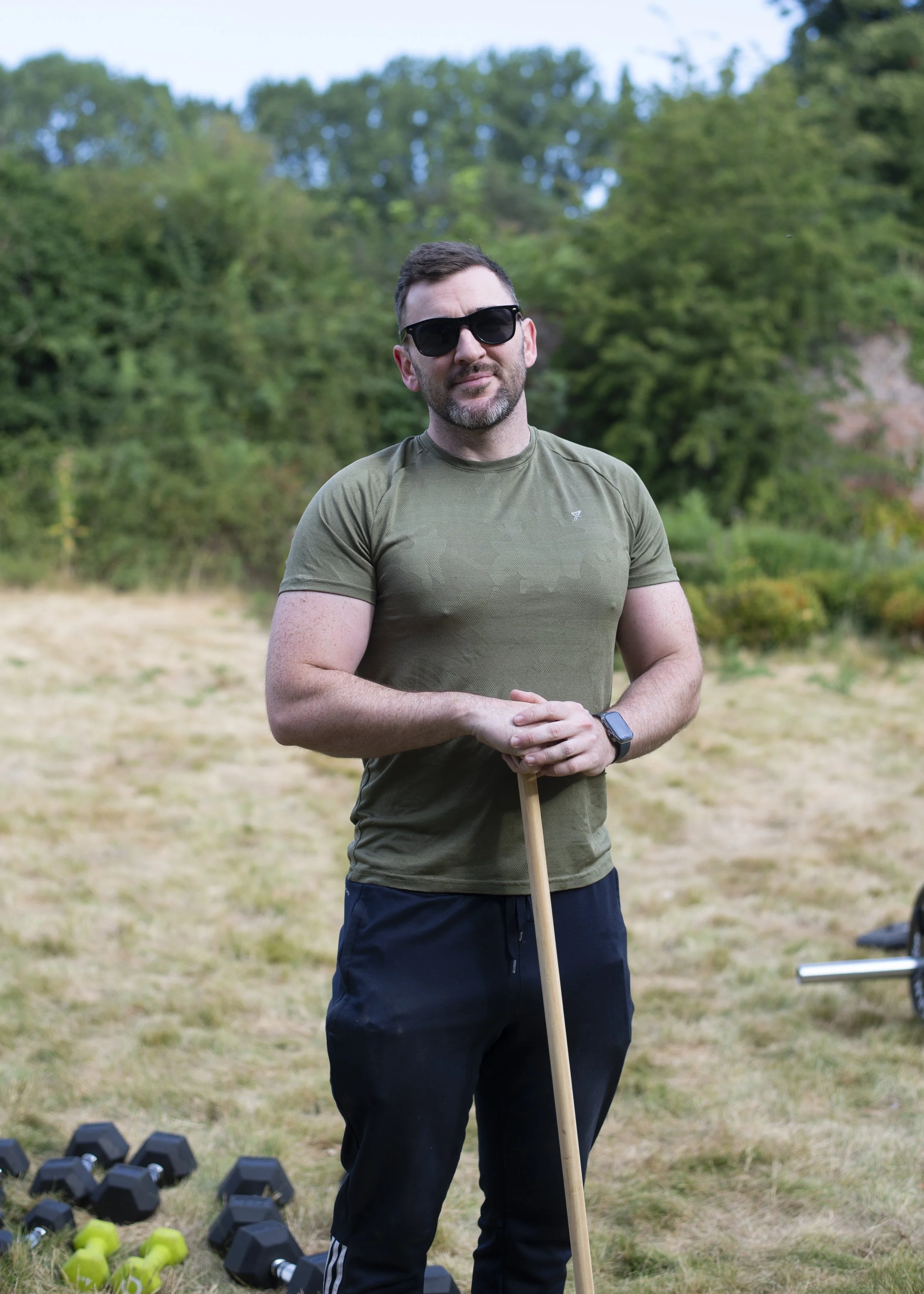
I'm Jack Bradley, a personal trainer and strength coach based near York, helping people of all ages and experience levels become stronger through simple, evidence-informed strength training.
Rather than chasing complicated workouts or constantly changing exercises, I build programs around progressive overload and the four fundamental movement patterns - hinge, squat, push and pull.
Whether your goal is building muscle, getting stronger, improving your fitness or achieving your first pull-up, my coaching focuses on long-term progress that fits around real life.
If you'd like help building a strength training program that's tailored to your goals, I'd love to hear from you.
Get in touch to find out more about personal training and small group strength coaching in York and the surrounding area.
