
How to Progress Weighted Pull-Ups: From Bodyweight Reps to Serious Strength
How to Progress Weighted Pull-Ups for Strength and Muscle
Pull-ups are one of my favourite exercises. Weighted pull-ups are probably my favourite upper-body strength exercise altogether.
Once you can perform clean bodyweight repetitions, adding weight turns the pull-up into something you can progressively overload in much the same way as a squat, bench press or deadlift and I treat it like a primary exercise, I feel like most strength programs lack this, rows and pulls are often an afterthought.
I currently train pull-ups twice per week and have worked up to performing two repetitions with an additional 50kg. 6 with 32.5kg and lots of other rep personal bests with varying weights. That hasn’t come from constantly attempting a new maximum. It has come from combining heavy weighted sets with enough bodyweight volume to continue building the muscles involved.
If you’re still working towards your first repetition, start with my complete guide to pull-up muscles, technique and beginner progressions.
If you can already perform several strict pull-ups, this article explains how to start adding weight and progress safely.
What is a weighted pull-up?
A weighted pull-up is simply a strict pull-up performed with additional external resistance.
The weight can be added using:
A dip belt and weight plate
A weighted vest
A dumbbell held between the feet
Chains
A loaded backpack
I prefer a dip belt because the weight hangs directly beneath you without interfering too much with your body position. Holding a dumbbell between your feet works, but I find it unnecessarily awkward once the loads become heavier and I’m pretty bad at it. You can just get a cheap dip belt honestly it is worth the investment.
The basic movement should remain the same:
Begin from a controlled dead hang with straight arms.
Brace your trunk and prevent excessive swinging.
Pull your elbows down towards your sides.
Continue until your chin clears the bar.
Lower under control until your arms are straight again.
Adding weight doesn’t mean the range of motion should suddenly become shorter, the weight actually can help with swinging too because it sort of counteracts the feeling of swinging forward.
When should you start adding weight?
I generally introduce weighted pull-ups once somebody can perform around 5–8 clean bodyweight repetitions.
Those repetitions should begin from a proper dead hang and finish with the chin clearly over the bar. If the final three repetitions involve kicking, swinging and desperately extending the neck, that isn’t really an eight-repetition set. I’d even go as far as to say you ought to be able to pause at the bottom.
You don’t have to wait until you can perform 15 or 20 pull-ups. In fact, somebody interested primarily in strength may benefit from adding a small amount of weight earlier and bringing the repetitions back down in the 1-5 rep range.
Start conservatively. An additional 2.5kg or 5kg is enough.
The first weighted session should feel like strength practice, not an attempt to discover how much weight your elbows can tolerate.
Why do weighted pull-ups?
They develop serious relative strength
A pull-up already requires you to move your entire body through space. Adding external weight means producing even more force while retaining control of your own body.
That makes weighted pull-ups an excellent measure of relative upper-body strength.
When I perform a pull-up with an additional 50kg, I’m not only lifting the plate. I’m moving my body weight as well, so the total system load is well over 130kg.
This is also why changes in body weight affect pull-up performance. Adding 5kg to your body is still adding 5kg to every repetition, even if it isn’t hanging from the belt. Although I will say being leaner does make the movement less awkward overall.
They train more than the lats
Weighted pull-ups heavily train the:
Latissimus dorsi
Biceps and brachialis
Rhomboids and trapezius
Rear deltoids
Forearms and grip
Abdominal and trunk musculature
Research examining pull-up variations has recorded high activation of the lats and biceps alongside meaningful involvement from the lower traps, infraspinatus, erector spinae and external obliques. In other words, it is a genuine compound exercise rather than an isolated lat movement. Pull-up muscle-activation research
They are easy to progressively overload
Bodyweight pull-ups can be progressed by adding repetitions, but eventually every set starts becoming an endurance exercise.
Adding weight allows you to bring the repetitions down and continue developing maximal strength. The progression is also very easy to measure:
Body weight
Additional weight
Repetitions completed
Technique and range of motion
There isn’t much room for ambiguity when 50kg is hanging between your legs.
They build grip strength
Every repetition requires you to support your full body weight plus the additional load through your hands.
That develops grip and forearm strength without needing a separate machine or complicated exercise. It can also carry over to deadlifts, rows and loaded carries.
I don’t use straps for weighted pull-ups. If grip becomes the limiting factor, I generally view that as something worth improving rather than immediately removing it from the movement. I will say i’ve never had any issues with grip due to the fact I deadlift & do pull-ups often.
Why I prefer weighted pull-ups to lat pulldowns
Lat pulldowns are a perfectly good exercise. I use them with clients who cannot yet perform pull-ups, and they are useful for accumulating additional back volume without supporting your entire body weight.
However, once somebody can perform good pull-ups, I usually make pull-ups the main vertical pulling exercise.
A lat pulldown stabilises your body using the seat and thigh pad. During a pull-up, you have to control your torso, shoulder blades and lower body while moving yourself around a fixed bar.
What I will say is I don’t really perform the lat-pull down and my back development as a 35 year old dad of almost two children is quite decent considering I was a pencil neck when I started.
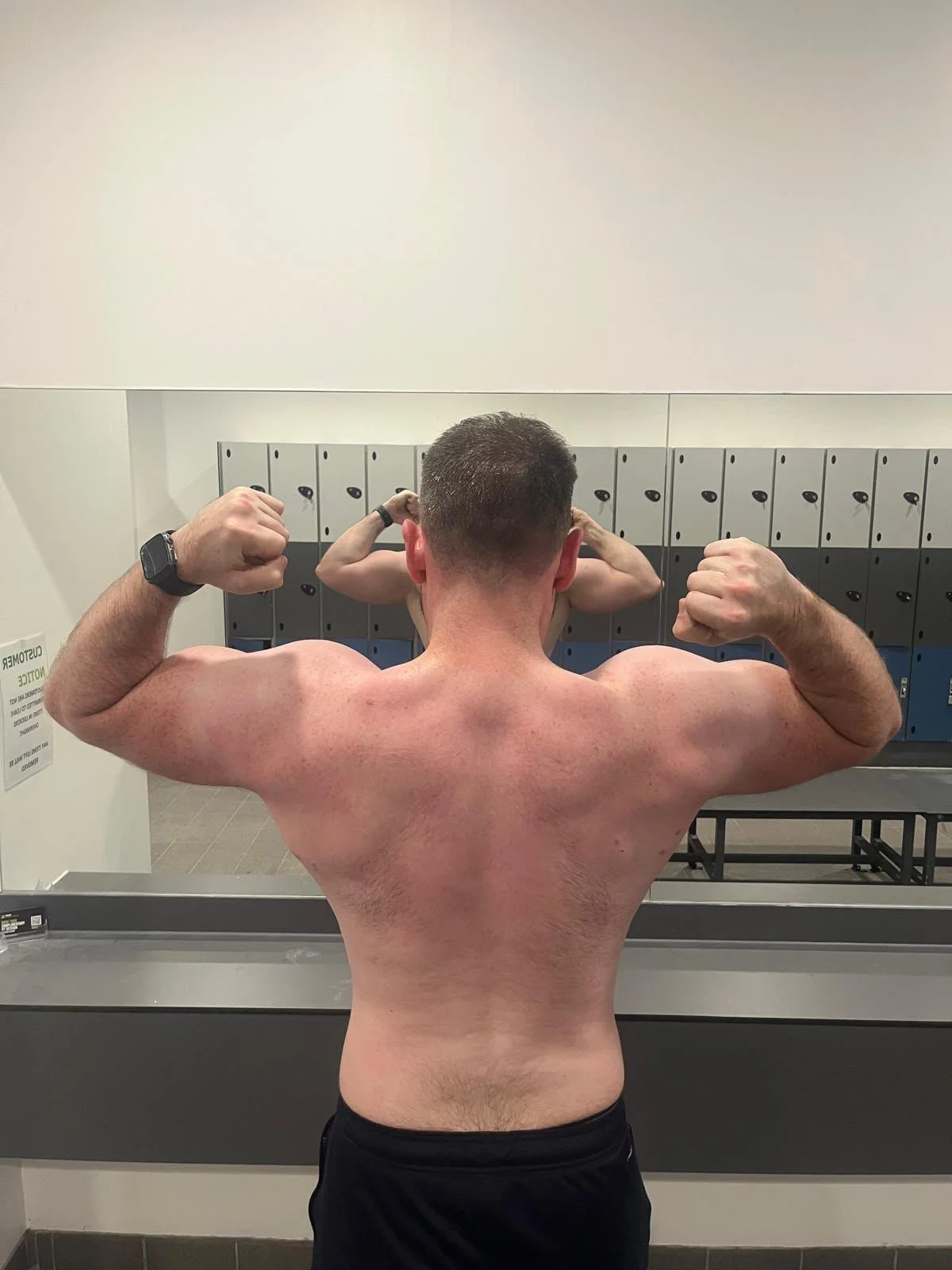
My back development from weighted pull ups
That makes the pull-up:
More demanding on the trunk
More demanding on grip
Better for developing relative strength
Easier to standardise between different gyms
More satisfying to progress
There is also a skill component. You become better at coordinating the shoulder blades, elbows and trunk as one movement.
That doesn’t necessarily mean weighted pull-ups are scientifically proven to build more lat muscle than pulldowns. Both can train the back effectively. My preference is based on the combination of muscle, strength, grip and body control that the pull-up develops.
I often use both: weighted pull-ups as the main strength movement and pulldowns or supported rows for additional higher-repetition volume.
How I programme weighted pull-ups
I train pull-ups twice per week.
One session has a heavier strength emphasis. The other provides more practice and muscle-building volume without trying to set a record.
Day one: Heavy weighted pull-ups
Work up to:
One heavy top set of 2–5 repetitions
Stop with approximately one repetition in reserve
Rest for 3–5 minutes before the top set
Then complete:
2–3 bodyweight back-off sets
Aim for 5–8 clean repetitions
Leave one or two repetitions in reserve
The heavy set develops strength and familiarity with additional load. The bodyweight sets provide extra high-quality volume to help build the lats, arms and upper back.
Heavy weighted pull-ups need relatively long rests. If you only rest for 60 seconds, your cardiovascular recovery and grip fatigue will limit the set before your pulling strength does.
I will tend to structure this in a 4 week block whereby Week 1 will be a top set with 2-3 in the tank, week 2, 1-2 in the tank, week 3 - 1 in the tank, week 4 - PB attempt.
I would do the first block with 5 repetitions, the following block with 4 and up the weight.
Day two: Bodyweight or lighter weighted pull-ups
Three or four days later, complete:
3–4 sets of 4–8 repetitions
Body weight or a lighter additional load
Approximately two repetitions in reserve
Two to three minutes of rest
This session should feel challenging but repeatable. It gives you another opportunity to practise the movement and accumulate volume without carrying the fatigue of another maximal session. You could even switch this out for a variation like a chin up or a neutral grip variation.
A simple weighted pull-up progression
Choose a weight you can lift for three clean repetitions with one or two repetitions still available.
Use a repetition range of 3–5:
Week one: 10kg × 3
Week two: 10kg × 4
Week three: 10kg × 5
Week four: 12.5kg × 3
You don’t necessarily have to add a repetition every week. Repeat the weight until you can reach the top of the range with consistent technique, then add 1.25–2.5kg and begin again at the bottom.
Small increases work better than repeatedly jumping by 5kg, particularly once you become stronger.
If your gym only has 2.5kg plates, microplates are useful. A 1.25kg increase can be enough to maintain progress without destroying the repetition range.
An example week
Session one: Strength
Weighted pull-up: work up to 1×3–5
Bodyweight pull-up: 3×5–8
Chest-supported row: 3×8–12
Biceps curl: 3×10–15
Session two: Volume
Bodyweight or lightly weighted pull-up: 4×4–8
Lat pulldown: 3×8–12
Cable or machine row: 3×10–15
Rear-delt exercise: 3×12–20
This gives you both specific pull-up practice and enough less-fatiguing back work to support muscle growth.
Common weighted pull-up mistakes
Adding weight too early
If you cannot yet control your body weight through a full repetition, additional weight won’t fix the problem.
Build your bodyweight pull-ups to at least five good repetitions first.
Turning every session into a maximum
Heavy pull-ups feel good, which makes it tempting to test your maximum every week.
Unfortunately, repeatedly grinding ugly repetitions is not the same as productive strength training. Most top sets should finish with one repetition still available so that you can accumulate the right amount of volume at the correct intensity. Maxing out will work for a little while and then you’ll stall or regress or worse, get injured.
Cutting the range of motion
A weighted half-repetition isn’t automatically stronger than a full bodyweight pull-up.
Use a consistent dead hang and clearly get your chin over the bar. Otherwise, you won’t know whether you have become stronger or simply shortened the movement.
Swinging the weight
A plate hanging from a dip belt can begin swinging if you rush the repetition.
Brace your abdomen, squeeze your glutes and allow the weight to settle before beginning. Control the lowering phase rather than dropping straight back into the bottom - You will irritate your tendons if you just aggressively drop into it.
Progressing despite elbow or shoulder pain
Weighted pull-ups place significant stress through the elbows, biceps and shoulders.
Build the load gradually and consider rotating between pronated, neutral and supinated grips if one position repeatedly causes irritation. Persistent or worsening pain is a reason to stop and have it assessed, not something to defeat through motivation.
Weighted pull-ups with my clients
I use the same basic principles with my personal-training clients in York.
Not everybody needs to reach a 50kg weighted pull-up. For one person, progress might mean moving from the assisted machine to their first bodyweight repetition. For another, it might mean completing five bodyweight pull-ups or adding their first 5kg plate.
My client George recently completed his first ever bodyweight pull-up at 75 after progressing from 70kg of assistance. That represents just as much meaningful progress as an experienced lifter adding another plate.
My client Rebecca who I wrote about before-hand hitting her first 5 in the palms facing position has since hit 10 and has transitioned into pronated grip pull ups.
The method remains the same:
Establish the current level
Practise the movement consistently
Use manageable progressions
Build both strength and muscle
Avoid rushing towards the final goal
Once a client reaches 5–8 strict repetitions, adding a small amount of weight gives us another clear route forward.
The takeaway
If you can perform 5-8 strict bodyweight pull-ups, you’re probably ready to begin weighted pull-ups.
Start with a small load, reduce the repetitions and treat the movement as a proper strength exercise. Use one heavy top set, follow it with bodyweight back-off work and practise pull-ups twice each week.
Weighted pull-ups have helped me build my back, arms, grip and overall upper-body strength. More importantly, they provide an almost endless progression: first you chase one bodyweight pull-up, then five, then your first weighted repetition-and eventually you find yourself hanging 50kg from a belt and wondering what comes next.
Just don’t sacrifice the range of motion to get there.
About The Author
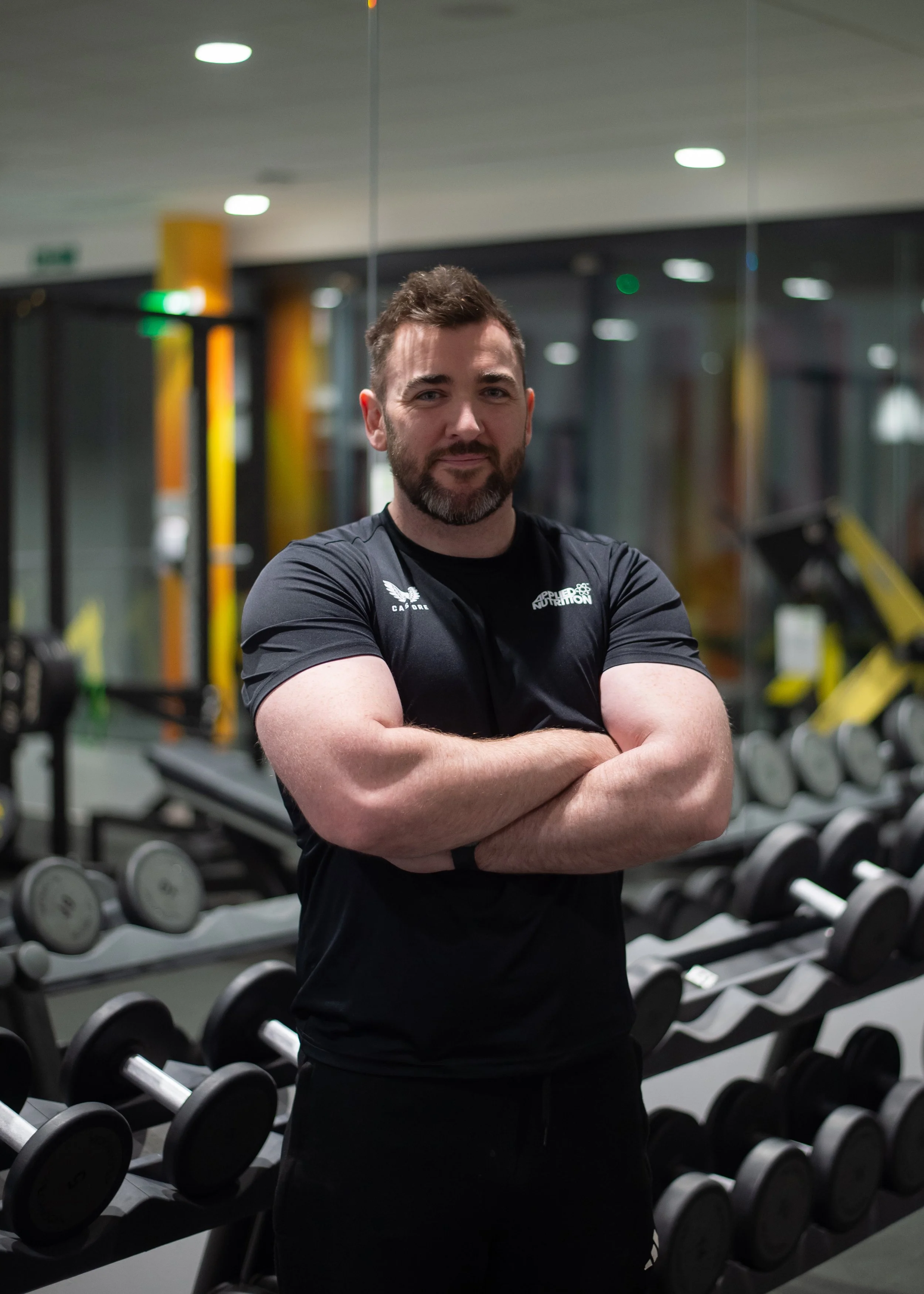
I'm Jack Bradley, a personal trainer and strength coach based near York, helping people of all ages and experience levels become stronger through simple, evidence-informed strength training.
Rather than chasing complicated workouts or constantly changing exercises, I build programs around progressive overload and the four fundamental movement patterns - hinge, squat, push and pull.
Whether your goal is building muscle, getting stronger, improving your fitness or achieving your first pull-up, my coaching focuses on long-term progress that fits around real life.
If you'd like help building a strength training program that's tailored to your goals, I'd love to hear from you.
Get in touch to find out more about personal training and small group strength coaching in York and the surrounding area.
