
From Weight Loss to Performance: Phoebe’s Strength and ATHX Journey
When Phoebe first came into the gym, the goal was fairly straightforward. She wanted to lose a little weight, improve her fitness and feel better about herself.
There is absolutely nothing wrong with that. It is probably the reason most people first consider joining a gym or working with a personal trainer.
However, one of the best things about Phoebe’s progress has not been a number on the scales. It has been watching her reasons for training gradually change.
Losing weight might have got her through the door, but getting stronger, fitter and seeing what her body can actually do is what has kept her going.
From exercising to training
There is a difference between exercising and training.
Exercise can simply mean turning up, moving around and burning some calories. Training has a purpose. You are working towards something measurable and your sessions connect together over time and not just spinning your wheels.
Phoebe now has plenty of those measurements:
A 110kg deadlift for three reps
A 70kg squat for 5 reps
Her first bodyweight pull-up
Several 5k runs completed improving each time
An ATHX event booked for October
Those are five very different achievements. Together, they show that Phoebe has not only become stronger. She has developed her relative strength, running fitness, confidence and overall work capacity and also some gruelling metcons and stints on the Ski-Erg.
A 110kg deadlift for three
Phoebe recently deadlifted 110kg for three repetitions… She was going to stop on two as you can see but there was plenty more in the tank.
That is not a token milestone or something that only sounds impressive because it has been written in a client progress post. It is a genuinely strong lift especially pound for pound it’s pretty heavy!
The deadlift is one of the best exercises for developing overall strength because it requires the legs, hips, back, grip and trunk to work together. I wrote more about why I rate the movement so highly in my complete guide to the deadlift.
We did not arrive at 110kg by constantly testing how much Phoebe could lift. It came from practising the movement, building strength through manageable training loads and gradually asking for a little more.
The three repetitions are important too. This was not an ugly one-off lift that she may never repeat. It showed that the strength was actually there.
Her first bodyweight pull-up
Phoebe has also achieved her first bodyweight pull-up - it’s in the training footage at the beginning of the blog post.
Pull-ups are unforgiving because you have to move your entire body through space. There is nowhere to hide and no machine to stabilise you.
Getting the first one usually requires a mixture of assisted pull-ups, controlled lowering, back and arm training, grip strength and plenty of consistent practice. I explain that process properly in my pull-up technique and progression guide.
Phoebe is not the only person preparing for ATHX who has reached that milestone. Rebecca, who will be doing the event with us in October, progressed from no pull-ups to her first rep and then continued building from there. You can read how Rebecca went from zero to five pull-ups here.
The first pull-up is rarely the end of the goal. It normally goes from “Will I ever be able to do one?” to “How many can I do next?”
Eventually, once somebody can perform five to eight clean repetitions, we can begin introducing additional load using the progression described in my weighted pull-up training guide.
Squatting 70kg and completing her first 5K
Alongside her deadlift and pull-up progress, Phoebe has squatted 70kg and completed her first 5K.
I think this combination is cool.
It is easy to put people into boxes. Someone is either a runner, a strength athlete or somebody who just goes to fitness classes. In reality, most people benefit from developing a bit of everything.
Phoebe can lift a genuinely respectable amount of weight, but she is also building the aerobic fitness and resilience needed to run continuously and recover between hard efforts.
Her first 5K was another clear achievement that had nothing to do with body weight. She covered a distance she had never completed before and now has a benchmark she can improve.
Preparing for ATHX
Phoebe is now training for ATHX in October.
ATHX combines running, rowing, SkiErg work and functional strength exercises into one event. It requires more than being strong for a single repetition or reasonably fit on one machine.
You need to be able to produce effort repeatedly, recover while continuing to move and maintain your technique when tired.
That means Phoebe’s training now has to develop:
Overall strength
Aerobic fitness
Strength endurance
Running ability
Grip and carrying capacity
Confidence working under fatigue
This gives all the strength work a wider purpose. The squats and deadlifts build the base, while running and conditioning sessions teach her to use that strength when her heart rate is high.
Phoebe will be doing ATHX alongside Rebecca and Chris. Chris has also moved from training primarily for strength towards a mixture of lifting, conditioning, triathlon training and ATHX preparation. His recent DEXA results showed that performance training can still produce significant changes in body composition, which I covered in Chris’s latest strength and ATHX update.
It should be a good team for October. All three have different starting points and strengths, but each of them has become noticeably more capable through having something specific to work towards. We’ve also got a 4th Ciara who I’ll be writing about in one of my next blog posts.
Why performance goals change your relationship with training
Body weight can be useful information, particularly if losing fat is important for your health or confidence. The problem is that it can become the only measure people use.
That makes training feel like punishment. You exercise because you ate too much, want to burn calories or are unhappy with what the scales showed that morning.
Performance goals give you more reasons to turn up, constant notions of progression, it’s great for your mental health too.
You start thinking about adding 2.5kg to a lift, getting another pull-up, running a little further or completing a conditioning session without needing as much rest.
Your body composition may still change, but it begins to feel like one part of the process rather than the only reason to train.
That is what has happened with Phoebe. She came in wanting to lose a little weight and has ended up becoming someone who can deadlift 110kg for three, squat 70kg, perform a bodyweight pull-up and run 5K.
Now she is training for an actual event.
That is a much more interesting story than simply watching the scales move.
The next goal
The immediate target is ATHX in October.
Between now and then, we will continue building Phoebe’s strength while developing the running fitness, work capacity and confidence required for the event.
There will be difficult sessions and parts of the event that expose weaknesses. That is the point of having a proper challenge. It gives us information, direction and another reason to keep progressing.
Phoebe originally came into the gym to lose a little weight. She is now training to see what she is capable of.
That shift is probably the biggest result of all.
If you are based in York and want to move beyond simply burning calories, I offer personalised strength and conditioning through Jack Bradley Fitness.
About The Author
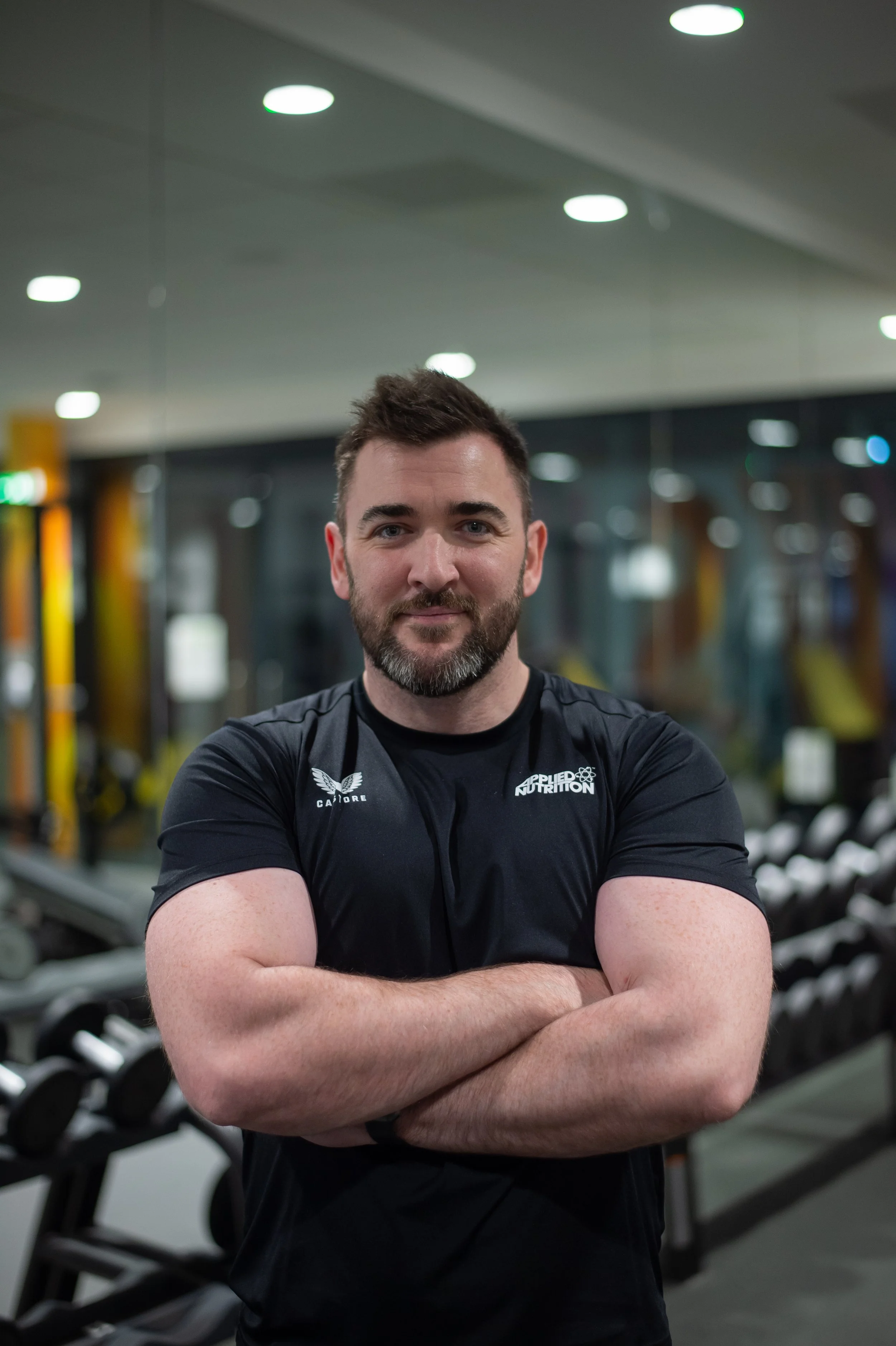
I'm Jack Bradley, a personal trainer and strength coach based near York, helping people of all ages and experience levels become stronger through simple, evidence-informed strength training.
Rather than chasing complicated workouts or constantly changing exercises, I build programs around progressive overload and the four fundamental movement patterns - hinge, squat, push and pull.
Whether your goal is building muscle, getting stronger, improving your fitness or achieving your first pull-up, my coaching focuses on long-term progress that fits around real life.
If you'd like help building a strength training program that's tailored to your goals, I'd love to hear from you.
Get in touch to find out more about personal training and small group strength coaching in York and the surrounding area.
