
Dips: The Upper-Body Squat
Dips are one of those exercises that look simple from the outside, but the moment you try to do them properly, you realise they’re a full-body lift disguised as a bodyweight movement. You know by now I love any movements that require moving your own body through space.. They’re often referred to as the upper-body squat -not for a gimmick but because they are a similar movement pattern to an upside down squat and also tick the same boxes:
• Big movement
• Loads of muscle involved
• Strong stretch under load
• Easily progressed
• Builds a lot of strength
And like the squat, dips have a reputation. Some people swear by them for chest and tricep growth. Others claim they’re “bad for your shoulders.” I’ve actually come to both of these conclusions at different times. Dips are incredible when you gain the mobility for them, build them gradually, and learn how to stabilise your shoulders. I’m happy to say that dips are here to stay in my own training.
Let’s break it all down.
Why Dips Are So Good
One of the biggest advantages of dips is the deep stretch you get across the chest and the front of the shoulders. Unlike a bench press - where the scapula is pinned down and the range of motion stops at the bar - dips let your body travel below your hands. That extra range is one of the reasons dips are great for chest growth. Your pecs are lengthened more under load, and muscles generally grow well when they’re trained in a long range.
You also get a powerful tricep stimulus because you’re pressing your own bodyweight and stabilising at the same time. And because your whole upper body has to stay controlled, your core, lats, serratus and even your upper back get involved keeping you in line. If you’ve never done them before.. try you’ll likely tremble quite a bit trying to stabilise.
Dips are essentially a compound exercise that forces you to move your body through space - similar to a pull-up. That’s why they’re such a good marker of relative strength. In fact it between pull ups and dips you basically hit all of the upper body in some capacity.
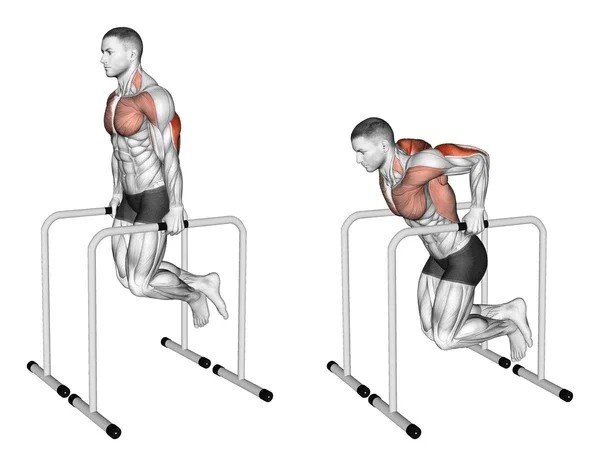
Muscles worked during the chest dip
But What About Shoulder Pain?
This is the part everyone wants to know.
Dips can be rough on the shoulders if:
You drop too low without the mobility
Your shoulder blades don’t move properly.
You flare your elbows aggressively
You bounce out of the bottom
You add volume/intensity too quickly.
Most of the “dips ruin shoulders” stories come from people letting their shoulders roll forward, divebombing too deep too soon, or doing them on unstable/wide bars.
My own injury story from dips comes from a combination of a few of these, I had a wobbly cheap rack at home, no other pressing equipment other than a dip bar and plates. I thought it would be a good idea to go from doing weighted dips seldomly to 3x a week and I earned myself a nice little bout of bicep tendonitis - which has since healed.
If you build dips progressively, control the bottom position, and respect your active range, they can actually strengthen your shoulders, not hurt them. The bottom position trains the anterior shoulder in a lengthened but active range - great for long-term resilience.
How to Make Dips Feel Good on Your Shoulders
Before you even think about loading dips, you need the mobility and control to get into the bottom position without your body compensating. Two things help massively:
1. Bottom-Position Holds
Just step onto the bars, lower yourself slowly, and pause at the deepest comfortable range while keeping your chest up and shoulders gently back.
If your shoulders feel like they’re being yanked forward, shorten the range and build gradually.
2. Band-Assisted Internal Rotation Stretch
Hook a band at elbow height, step forward, let the arm gently rotate internally.
This opens up the anterior shoulder and helps you tolerate the bottom position better. If you get any shoulder pain bench pressing this one is good too, it is what basically fixed mine.
Both drills make dips feel far more comfortable.
How to Do Dips Properly
Start tall, brace lightly through the core, and lower yourself by allowing your chest to come slightly forward while keeping the shoulders from collapsing forward. Think: open chest, elbows tucked-ish, stable shoulder blades.
Go as deep as you can control, not as deep as possible.
The goal isn’t to bottom out - it’s to stay strong and controlled throughout the range, if you can pause slightly.
Press yourself back up without letting the elbows flare or shrugging the shoulders.
Progressions (If You’re Not Ready for Full Dips)
Assisted Dips
Use a band or an assisted dip machine.
The band option is great because it mimics the real movement and forces you to stabilise.
Negative Dips
Jump or step to the top, then lower yourself slowly for 3–5 seconds.
This builds strength where you’re weakest: the bottom.
Dip Holds
Top-position holds and bottom-position holds build stability, confidence and joint tolerance.
Progressions When You’re Strong Enough
Weighted Dips
Once you can hit 8–10 controlled reps, start adding load.
A dip belt works best.
Weighted dips build a ton of strength across the chest and triceps and respond really well to low-to-moderate rep ranges.
Paused Dips
Pause at the bottom for one or two seconds.
If your dips ever feel sloppy or unstable, pauses are a game-changer.
They force control, clean up your pattern, and reduce shoulder irritation.
High-Rep Dips
Great for chest hypertrophy as long as you avoid bouncing.
If you’re doing sets of 12–20, keep the reps strict and avoid dropping too low under fatigue.
Common Mistakes
Dropping into the bottom and bouncing out
This is where most shoulder irritation comes from.
Letting the shoulders roll forward more than they can handle
Just go to where you can comfortably get to don’t force range.
Huge elbow flare
A slight flare is natural, but a wide flare puts unnecessary stress on the front of the shoulder.
Why Dips Belong in Your Training
Dips build:
• Strong, dense chest and triceps
• Shoulder stability
• Relative strength
• A huge stretch-under-load stimulus
• Control in lengthened positions
And just like the squat for the lower body, dips teach you to stay strong and stable while controlling your own body through space. When done well, they’re one of the best upper-body movements you can do.
About The Author
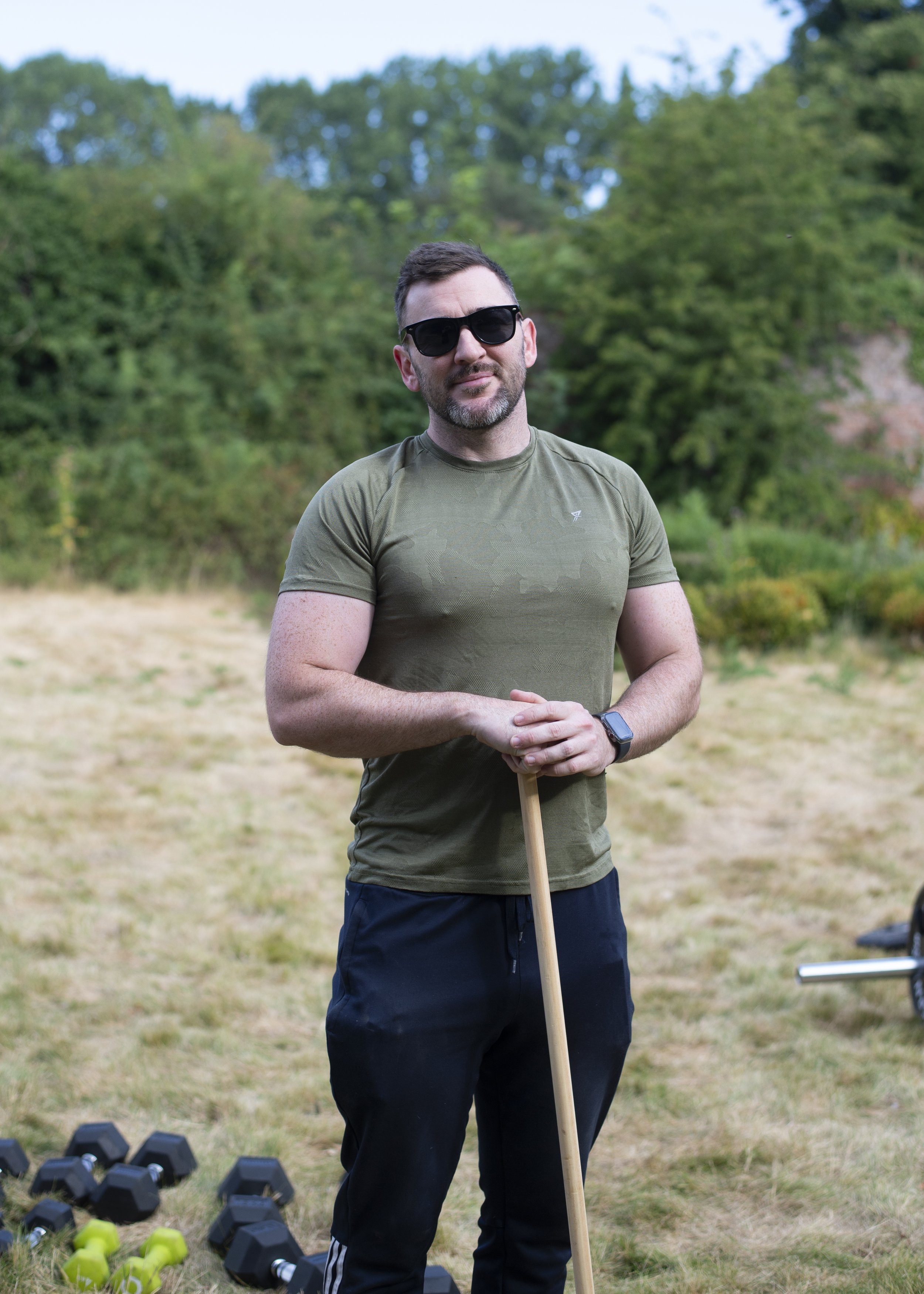
I'm Jack Bradley, a personal trainer and strength coach based near York, helping people of all ages and experience levels become stronger through simple, evidence-informed strength training.
Rather than chasing complicated workouts or constantly changing exercises, I build programs around progressive overload and the four fundamental movement patterns - hinge, squat, push and pull.
Whether your goal is building muscle, getting stronger, improving your fitness or achieving your first pull-up, my coaching focuses on long-term progress that fits around real life.
If you'd like help building a strength training program that's tailored to your goals, I'd love to hear from you.
Get in touch to find out more about personal training and small group strength coaching in York and the surrounding area.
