
Strength Training for Older Adults in York: George’s Story
From Walking Stick to Pull-Up at 75: George’s Strength Comeback
This is George. He is 75 years old and has just completed the first unassisted pull-up.
Not his first pull-up since turning 70. Not his first pull-up since recovering from surgery. His first bodyweight pull-up.
When George first started personal training with me in October 2025, that would have seemed a very long way off.
He had previously undergone surgery and, for a period, had been unsteady on his feet and needed a walking stick. By the time we began working together, he had moved on from the stick, but the experience had understandably left him lacking strength, fitness and confidence in what his body could do.
Where we started
I still remember putting George on the assisted pull-up machine for the first time.
We started with 70kg of assistance and, if I’m honest, I was slightly nervous about him getting on and off the machine safely. It requires you to step onto a moving platform, and at that stage George was still finding his feet -quite literally.
The goal wasn’t initially to get him doing bodyweight pull-ups. It was simply to help him become stronger, steadier and more physically capable.
We trained twice per week, progressing things gradually and working within what George could safely manage at the time.
The assistance on the pull-up machine began coming down:
70kg
60kg
50kg
40kg
Eventually, just 14kg
As the assistance decreased, George was lifting more and more of his own body weight. Then, in July 2026, at 75 years old, he stepped up to the bar and completed his first fully unassisted pull-up.
Not bad for somebody I was once nervous about stepping onto the machine.
Training at 75
George puts 100% effort into every session. I don’t go easy on him either.
We train twice a week and work on far more than pull-ups. His programme includes exercises designed to improve his leg strength, mobility, upper-body strength and general fitness - I train him similar to how I train myself.
The aim isn’t to train him as though he is fragile. It is to give him an appropriate challenge and progressively build what his body is capable of doing.
That has included movements such as:
Assisted and bodyweight split squats
Squats
Deadlifts—currently up to 70kg
Back extensions
Rows and pulldowns
Pressing exercises
Intervals on the SkiErg
Progressive pull-up training
Everything is scaled to George’s current ability, but it still has to be challenging enough to create an adaptation.
This is an important distinction. Training safely doesn’t mean avoiding effort, and getting older doesn’t mean exercise should be reduced to moving very light weights around without any real progression.
Can you still build strength and muscle in your 70s?
When I started training George at 74, I genuinely wasn’t sure how much strength or muscle somebody of that age could still build.
I knew strength training would be beneficial, but I didn’t know what the realistic ceiling might be.
Watching George’s progress really surprised me and encouraged me to look further into the research, and it turns out that our ability to adapt lasts much longer than many people assume.
A systematic review of resistance-training studies in adults aged 75 and over found that older adults could make meaningful improvements in both muscle strength and muscle size. Even when researchers looked specifically at participants over 80, resistance training still produced significant strength improvements. Research published in Sports Medicine
One of the best-known studies took things even further. Researchers put frail care-home residents with an average age of 90 through eight weeks of progressive resistance training. The participants increased their strength, muscle size and walking speed—with some participants being as old as 96. The original study published in JAMA
That doesn’t mean everybody in their 80s or 90s will suddenly start performing pull-ups. It does show that age alone doesn’t remove the body’s ability to respond to training.
You may need to start at a different level. Progress might be slower, and previous injuries or health conditions have to be considered. But older muscles are still capable of becoming stronger.
Why the pull-up matters
A bodyweight pull-up is a great achievement at any age. Plenty of otherwise fit adults cannot do one.
For George, however, the pull-up represents more than upper-body strength.
It shows the difference between where he started and what he can do now. He has gone from recovering after surgery, walking with a stick and being unsteady on his feet to lifting his entire body weight up to a bar.
It’s evidence that his body hasn’t simply been maintained - it has become more capable.
Strength training for older adults isn’t really about collecting gym numbers for the sake of it. It is about making everyday life easier and preserving independence.
Stronger legs can make getting out of a chair or climbing stairs easier. Better balance can reduce the likelihood of losing your footing. Greater upper-body strength makes carrying and lifting things less demanding.
And occasionally, it means doing your first pull-up at 75.
Starting strength training later in life
A lot of people assume they have left it too late to begin strength training once they reach their 60s or 70s.
They worry that they are too old, too unfit or too far behind to make meaningful progress. In reality, those are often the reasons why starting becomes more important.
You don’t need to be fit before you begin. You don’t need previous gym experience, and you certainly don’t need to start with pull-ups.
It is a real pet peeve of mine because I actually don’t expect beginners coming to me to have much athletic ability at all.
You need exercises that are appropriate for your starting point, a program that progresses gradually and enough consistency to allow your body to adapt.
George started with 70kg of assistance. Now he needs none.
Personal training for older adults in York and Buttercrambe
I provide one-to-one personal training for older adults in York, with sessions adapted around individual fitness levels, previous injuries and confidence.
I also run one-to-one sessions and small group fitness classes in Buttercrambe, near Stamford Bridge. These sessions focus on building practical strength, improving fitness and helping people remain active and capable as they get older.
You won’t be expected to already know your way around a gym or keep up with somebody half your age. We start with what you can currently do and build from there.
The takeaway
At 75, George is stronger than he was at 74.
It’s clear after reading this but it challenges the idea that physical decline is the only possible direction once we get older.
Some effects of aging are unavoidable. Losing all of your strength, fitness and confidence isn’t.
George’s progress has come from training twice a week, putting in 100% effort and gradually doing more than his body could do before.
His first bodyweight pull-up may have lasted only a few seconds, but it was the result of nine months of consistent work.
And I’m no longer nervous about him getting onto the pull-up machine.
About The Author
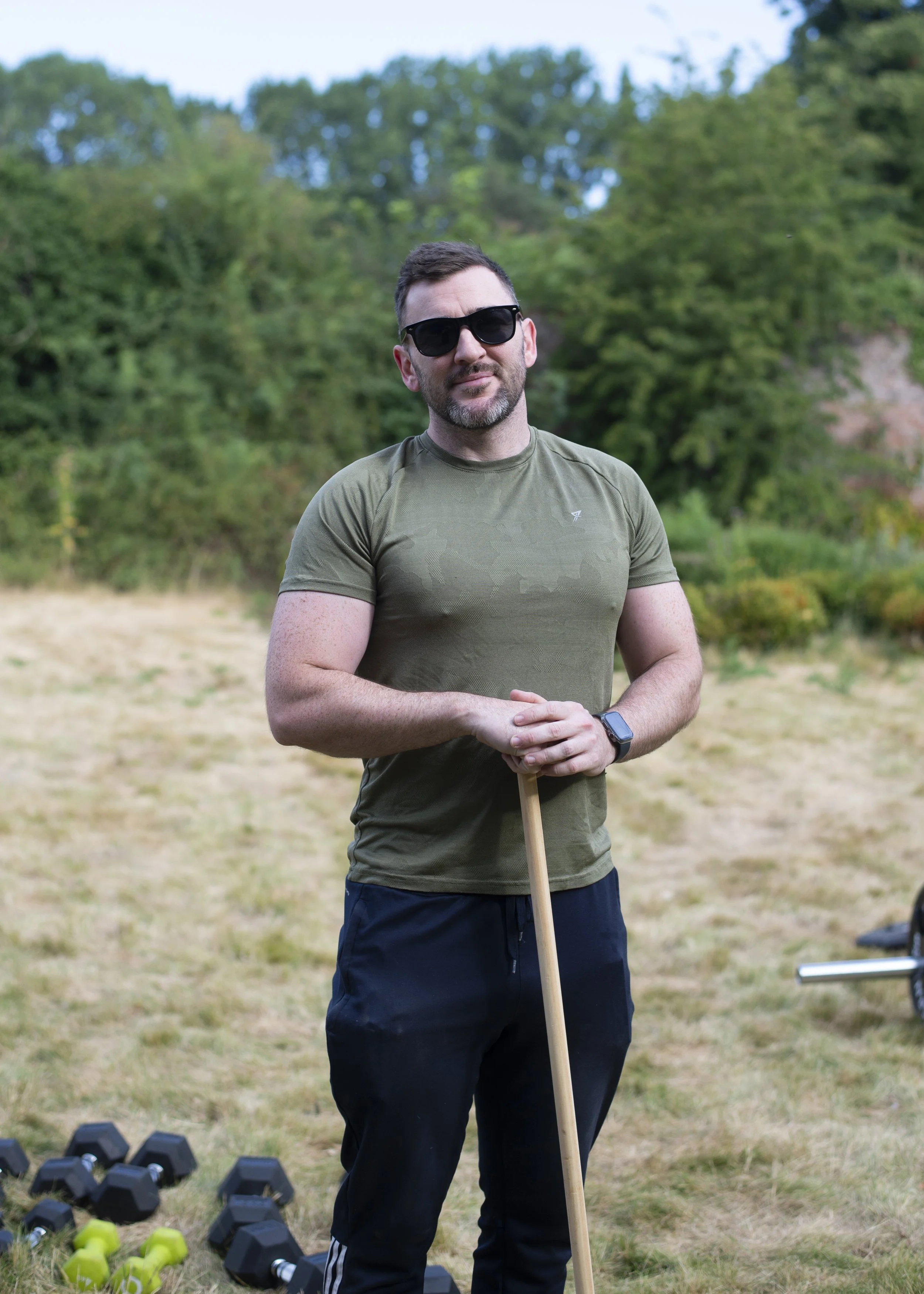
I'm Jack Bradley, a personal trainer and strength coach based near York, helping people of all ages and experience levels become stronger through simple, evidence-informed strength training.
Rather than chasing complicated workouts or constantly changing exercises, I build programs around progressive overload and the four fundamental movement patterns - hinge, squat, push and pull.
Whether your goal is building muscle, getting stronger, improving your fitness or achieving your first pull-up, my coaching focuses on long-term progress that fits around real life.
If you'd like help building a strength training program that's tailored to your goals, I'd love to hear from you.
Get in touch to find out more about personal training and small group strength coaching in York and the surrounding area.
