
Building Muscle After 40: Chris’ Sprint Triathlon and ATHX Journey
From Sprint Triathlon Training to ATHX: Chris’ Latest Progress
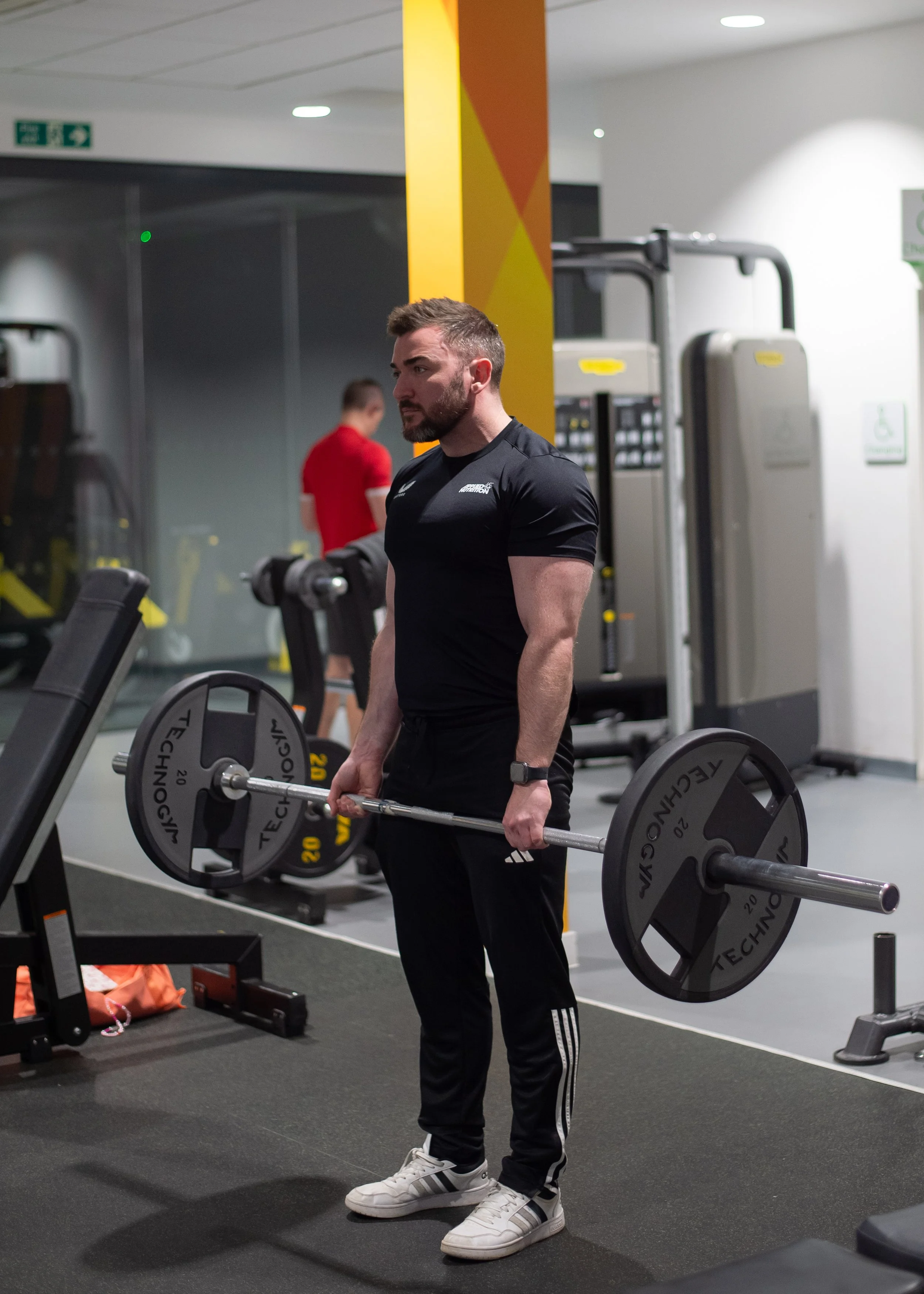
The last time I wrote about Chris, he had gone from recovering from rotator cuff surgery to benching 100kg and building a level of strength and fitness that would put most men his age to shame.
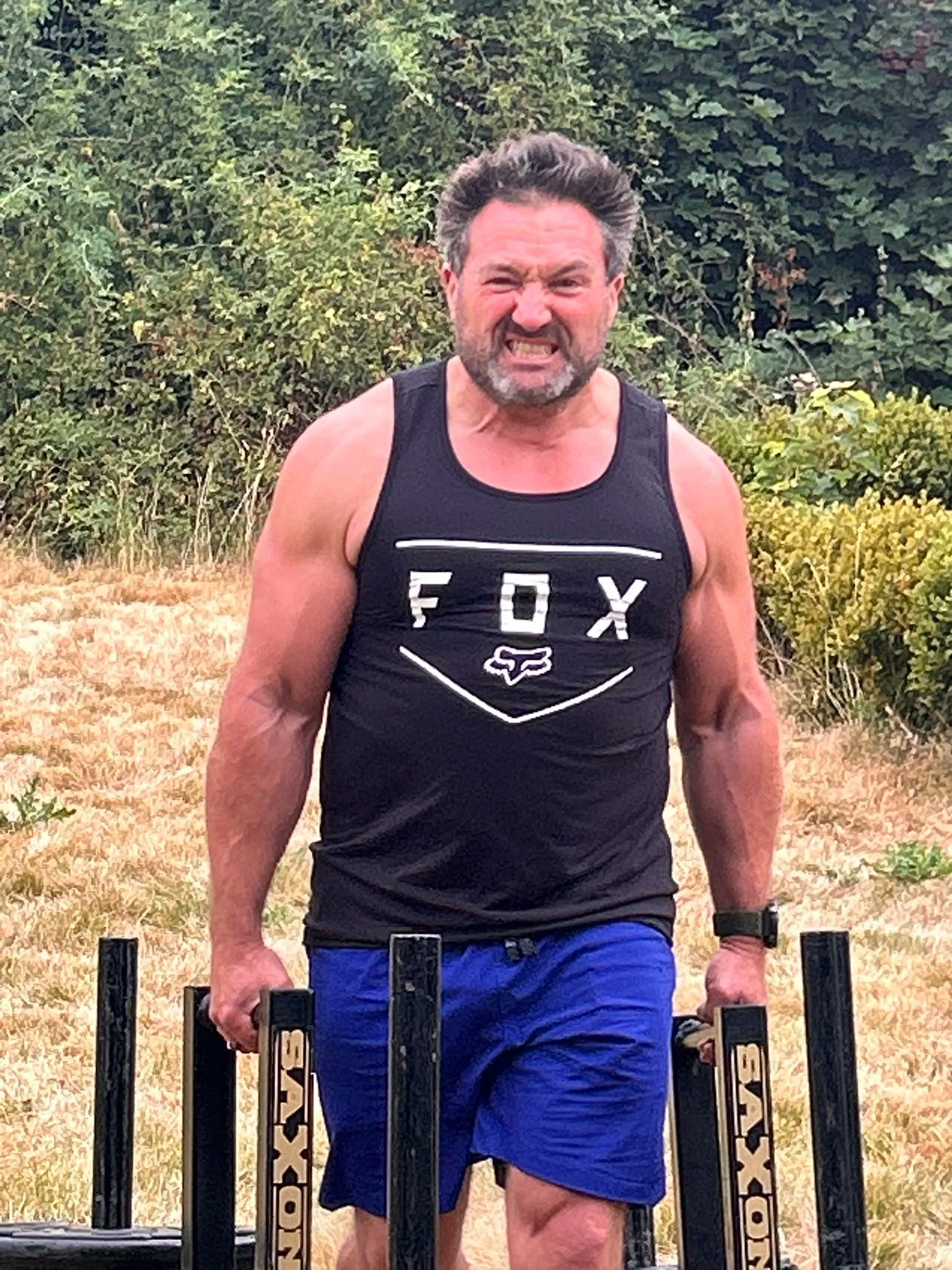
Since then, things haven’t exactly slowed down.
Chris has been training for a sprint triathlon, raising two children and continuing to push his strength and conditioning. He turns 47 this year, so while he’s no spring chicken, apparently his body hasn’t had the memo.
He has also done all of this while navigating a broken finger following another mountain biking accident. Apparently one comeback from a mountain bike injury wasn’t enough. I specifically told him to be careful the day he left for the trip as well.
Training for performance
One thing I like about training Chris is that there is always a performance goal behind what we’re doing.
The sprint triathlon has meant developing his swimming, cycling and running, while our sessions have continued to build strength and improve his ability to work hard under fatigue.
More recently, we’ve also started preparing for the ATHX Games in January. ATHX combines running, rowing and functional strength exercises, so it requires a mixture of aerobic fitness, strength and the ability to keep working when your body would quite like you to stop.
Our sessions have included some fairly unpleasant conditioning workouts, including variations of the ATHX metcon:
Ski Erg and rowing intervals
Sled pushes and drags
Sandbag and loaded carries
High-repetition strength work
Full-body conditioning with limited recovery
Chris attacks pretty much everything I give him at 100%. Occasionally I think he regrets doing that halfway through the session, but he still gets it finished. I’d want him in my corner during a zombie apocalypse.
The broken finger meant we had to adapt certain exercises while it healed, but it didn’t stop him training. We worked around it, continued building his fitness and avoided allowing a temporary injury to derail the wider plan.
Recomping without a restrictive diet
What makes his latest results particularly interesting is that we haven’t been running an aggressive fat-loss phase.
Chris hasn’t been heavily restricting calories, and the scales haven’t changed dramatically. His body weight dropped by 3kg, from 96.6kg to 93.6kg, across roughly ten months.
If we only looked at body weight, that might not appear especially dramatic.
His latest DEXA scan tells a much better story:
Lean mass increased from 76.09kg to 77.18kg — an increase of 1.08kg
Fat mass decreased from 16.71kg to 14.51kg — a reduction of 2.2kg
Body-fat percentage dropped from 17.5% to 15.4%
Visceral fat decreased from 115cm² to 106cm²
Appendicular Lean Mass Index increased from 12.6 to 13.3kg/m²
In simple terms, Chris has gained around a kilogram of lean mass while losing more than two kilograms of fat.
That is a genuine body recomposition: becoming leaner and more muscular without relying on a drastic diet or chasing rapid weight loss.
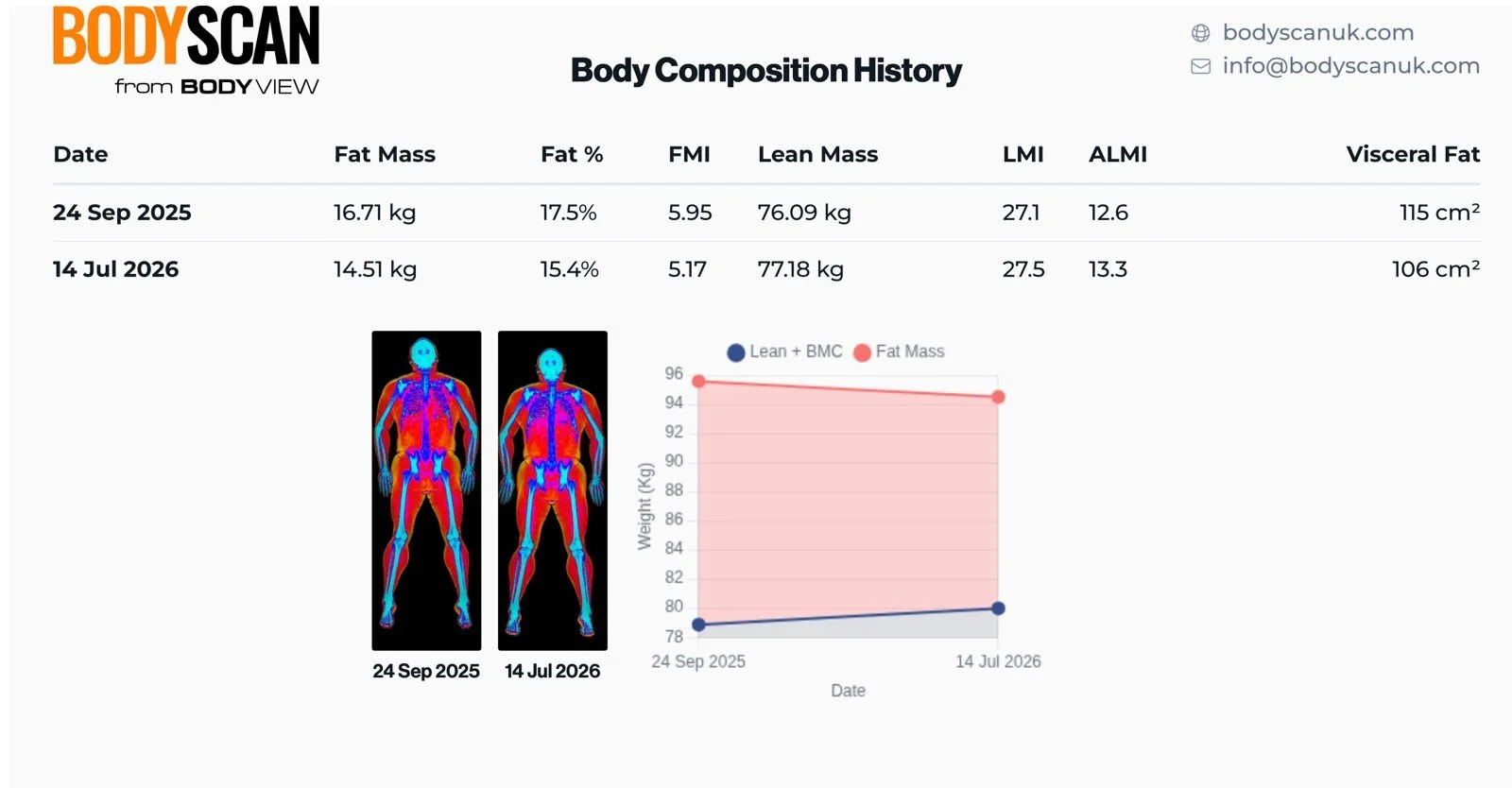
Chris’ two DEXA scan results side by side.
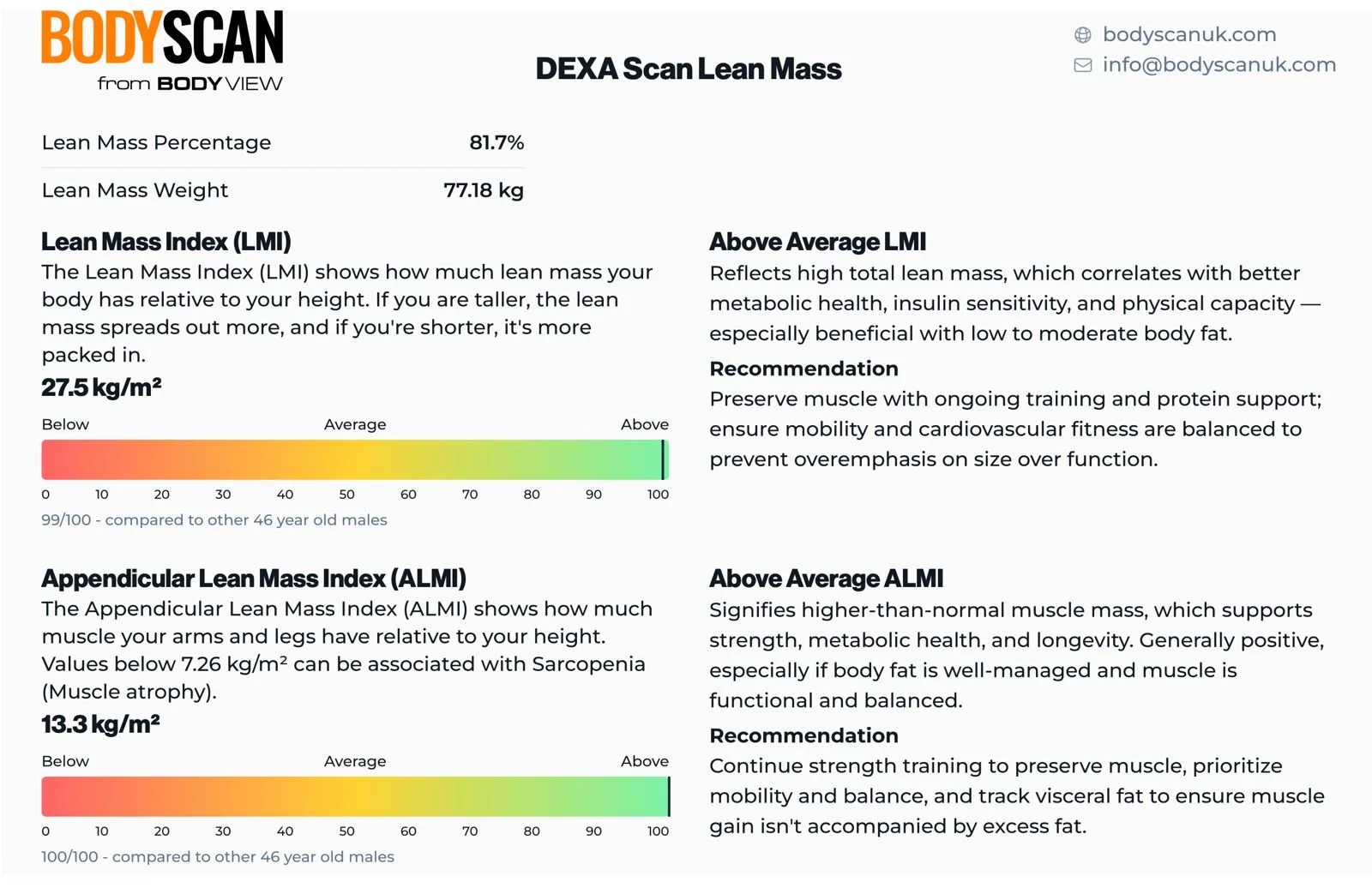
Lean muscle mass comparison to other men his age.
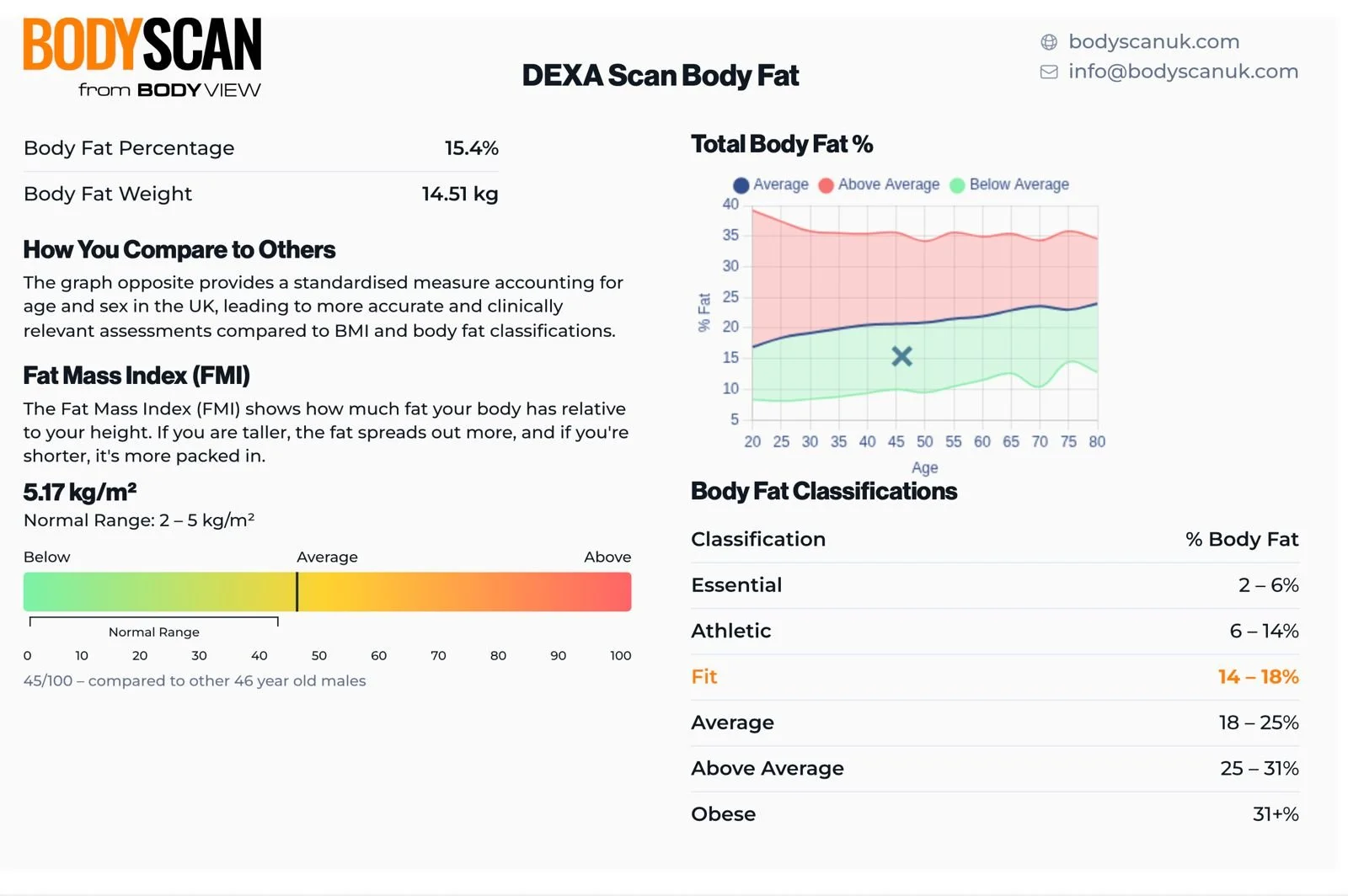
Bodyfat Analysis
More than a number on the scales
This is a good example of why scale weight doesn’t always tell you much on its own.
Chris is only around 3kg lighter, but the composition of that weight has changed considerably. He now carries more lean mass, less total fat and less visceral fat around his internal organs.
His lean mass is also exceptionally high for his age. The scan placed his overall Lean Mass Index at 99 out of 100 compared with other 46-year-old men, with his arm and leg lean mass also scoring extremely highly.
That doesn’t mean BMI suddenly becomes useful, by the way. According to BMI, Chris is still classified as “obese.” The woman carrying out his DEXA scan actually laughed when she saw the classification. According to the same scan, he is 15.4% body fat and carries more lean mass than almost every man his age.
Context matters.
Fit for something
The biggest achievement isn’t simply gaining muscle or reducing body fat.
Chris is building a body that can actually do things.
He can lift heavy weights, complete demanding conditioning sessions, train for a sprint triathlon, ride his mountain bike and keep up with two children. Next up, he’ll be putting all of that work to the test at the ATHX Games.
That is the kind of fitness I want my clients to build: strength, muscle and cardiovascular fitness that have a purpose beyond how somebody looks in a mirror. Although he does look good in a mirror also.
The takeaway
Turning 40, having children or being busy with work doesn’t mean your physical best is automatically behind you.
Chris is approaching 47 and is stronger, leaner and considerably fitter than most men half his age. He hasn’t achieved that through an extreme diet or a perfect lifestyle. He has achieved it by training consistently, working hard and continually having something to aim towards - even when a broken finger meant we had to adapt the plan.
The goal now is to arrive at ATHX in January strong, fit and ready to perform.
Judging by the effort Chris puts into his sessions, I suspect he’ll do more than simply take part.
About The Author
I'm Jack Bradley, a personal trainer and strength coach based near York, helping people of all ages and experience levels become stronger through simple, evidence-informed strength training.
Rather than chasing complicated workouts or constantly changing exercises, I build programs around progressive overload and the four fundamental movement patterns - hinge, squat, push and pull.
Whether your goal is building muscle, getting stronger, improving your fitness or achieving your first pull-up, my coaching focuses on long-term progress that fits around real life.
If you'd like help building a strength training program that's tailored to your goals, I'd love to hear from you.
Get in touch to find out more about personal training and small group strength coaching in York and the surrounding area.
